

05 Nov 2026
By Kiran Money and Alice Walker
5 literacy teaching insights for 2027 planning
About this resource
Support your literacy planning for 2027 with these insights and planning guide.
Authors: Kiran Money and Alice Walker are Academy Expert Teachers in Residence, who bring first-hand expertise from schools to the work of the Academy.
Who is it for
Teachers, literacy leaders and school leaders
Teachers are deep in planning for 2027 and for many, literacy is front of mind. Use this article and planning guide to support discussion, identify priorities and consider how reading and writing instruction can be strengthened across your school.
In this article you'll find:
- 5 evidence-informed literacy planning insights drawn from classroom practice
- Literacy planning guide: summary insights in printable format.

Download

5 literacy planning insights
1. Structured literacy and the Big 6 are becoming standard
Increasingly, structured literacy is emerging as the standard approach to teaching reading. For many teachers, this means building learning around the Big 6: a systematic model for teaching components of reading:
- Oral language
- Phonological/phonemic awareness
- Phonics
- Vocabulary
- Fluency
- Comprehension
What this looks like in the classroom
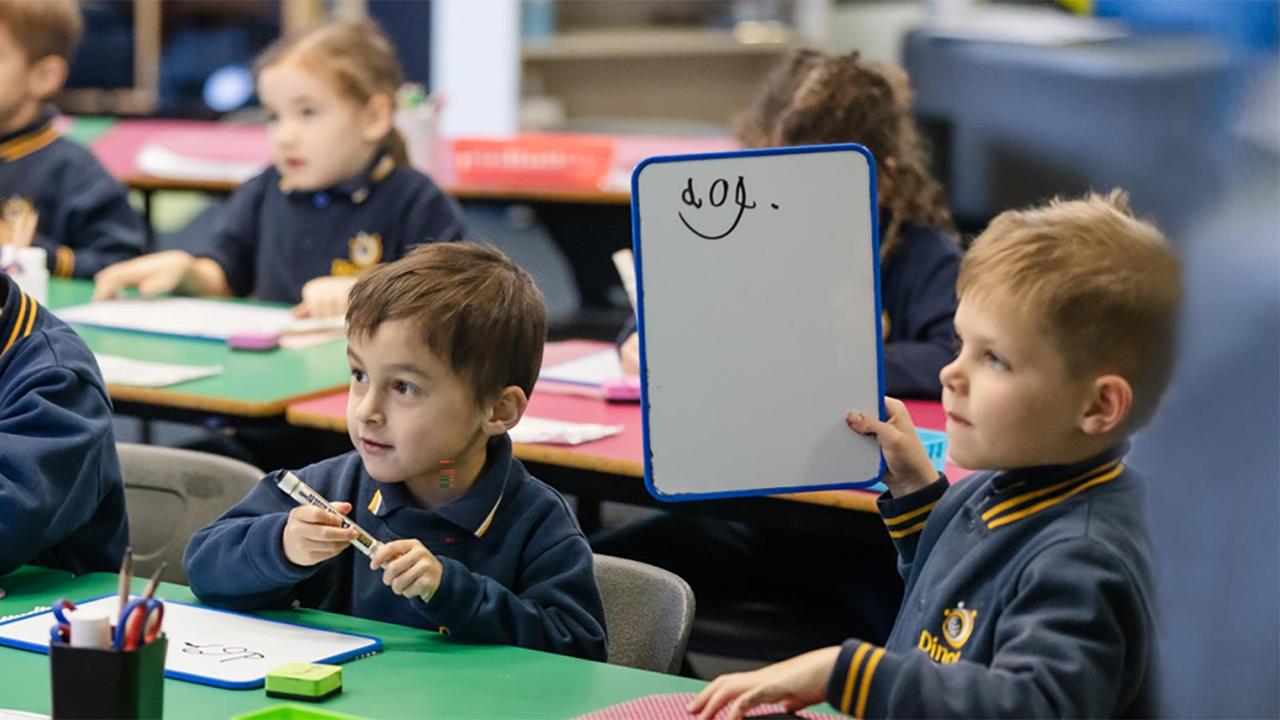
Kiran worked with Foundation teachers in Melbourne's southwest to build a literacy block around the Big 6. They audited their current practices against each component, ensuring each component was given dedicated time. The model continued into years 1 and 2 and contributed to strong outcomes - this cohort had the second highest NAPLAN results in their network.
In secondary schools, rather than focusing solely on assigned texts, we should make dedicated time to develop oral language, vocabulary and comprehension skills.
For 2027 planning
Audit your literacy block or unit outlines against the Big 6. Are you giving each component dedicated time? What does your cohort need, where are the gaps, and what could a structured literacy block look like?
2. Teach reading explicitly to support every student
Students arrive at school with different levels of knowledge and reading capabilities. Teaching all required knowledge explicitly, rather than assuming it, supports equity across the cohort.
What this looks like in the classroom
A think-aloud is a good example of an explicit comprehension-monitoring strategy. The teacher:
- Reads and pauses when something doesn’t make sense to them
- Identifies what isn’t making sense
- Applies a strategy, such as re-reading or reading more slowly
- Explains why they chose that strategy.
The goal is for students to develop self-regulation, replicating the same process for their own reading.
For 2027 planning
List the must-have skills for each lesson or unit. Then plan how you will assess current capabilities, teach explicitly to fill gaps, and build in comprehension monitoring.
3. Writing needs intentional instruction too
Like reading, writing benefits from a systematic and explicit approach. The Australian Education Research Organisation’s writing instruction model gives teachers a useful, evidence-based framework to follow:
- Build students' knowledge and language skills
- Teach about the genre
- Provide explicit instruction about writing
- Students practise writing
- Assessment
What this looks like in the classroom
Take advantage of the symbiotic relationship between reading and writing. In practice:
- Explicitly teach the foundations of writing: handwriting, spelling, sentence construction, grammar, punctuation and genre.
- Select a text for reading, deconstructing the genre so students understand its components
- Students then build their own using a gradual release of responsibility: 'I do, we do, you do'.
For 2027 planning
Be intentional about the mentor texts you choose, prioritising those with rich examples of the features of writing. Draw explicit attention to each feature to model writing in an engaging way.
4. We can check for understanding as we go
Checks for understanding have long been part of the teacher’s toolkit. Where previously we did them intuitively, in explicit teaching, we structure them into each lesson. Assessing understanding in real time lets us close gaps before moving on in a jam-packed curriculum.
In the classroom
Hinge questions are a quick way to assess whether students are ready to move on. For example, in a Year 8 unit on The Outsiders:
- The teacher asks a multiple-choice question about what motivates a particular character. Some of the multiple-choice answers contain common misconceptions, to make sure students have really understood.
- The responses show whether to re-teach, correct or move on, and who needs more support.
For 2027 planning
Build responsive teaching into your lesson plans. Note what you want students to demonstrate, then choose the method that will best draw it out. School leaders can include responsive teaching in their instructional playbook, supporting staff to embed it across all year levels.
5. The new Victorian curriculum brings it together
From 2027, all government and Catholic schools will align to the new Victorian Curriculum. It brings together all of the above in a structured literacy teaching model, building strong readers and writers.
Dr Nathaniel Swain is a teacher, instructional coach and writer, and one of the facilitators of our Leading Literacy program. He notes that the new curriculum provides an opportunity to review how literacy teaching is embedded across all subjects.
'With the opportunity and challenge that implementing a new curriculum brings, schools should take stock of all the ways in which they develop students' literacy skills, and how this integrates with the building of content knowledge across the curriculum,' Nathaniel says.
'Any time students are learning content, they can apply literacy skills: discussing content (oral language), comprehending/interpreting (reading and responding), as well as expressing/clarifying their thinking (writing and revising).'
In the classroom
Teachers can use the scope and sequence charts provided by VCAA to support development of key literacy skills from Foundation to Year 10.
Scope and sequence charts | VCAA
For 2027 planning
Principals and school leaders should embed the new curriculum in strategic and implementation plans. Middle leaders and literacy leaders should support connecting strategy with what goes on in the classroom.
Leaders at both levels can also identify the professional learning their school needs to put the curriculum into practice. The Academy programs below are a good place to start.
Download our literacy planning guide
Our Literacy Planning Conversation Guide is a useful discussion tool for teaching teams, literacy leaders and school leaders.