


Leading Literacy


About the program
Develop a school-wide literacy improvement strategy.
Leading Literacy is designed for vertical school teams to develop their knowledge and capability to plan and lead evidence-informed whole-school improvement in literacy practices and learning outcomes.
Teams will gain insights using contemporary research and evidence-informed approaches aligned with:
- the Victorian Curriculum English 2.0
- the Department of Education’s Victorian Teaching and Learning Model (VTLM) 2.0
- Victoria’s approach to teaching reading F–2
- Melbourne Archdiocese Catholic Schools’ Vision for Instruction
- Magnify Sandhurst.
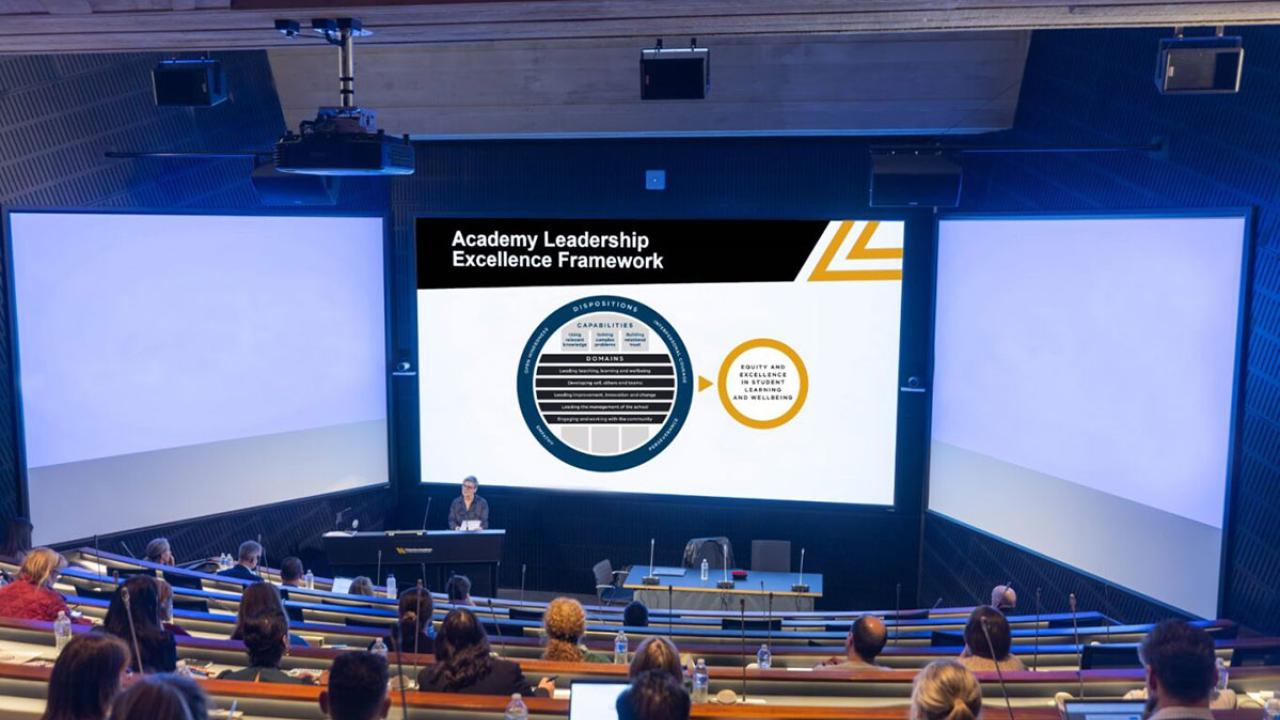
The program draws on the Academy Leadership Excellence Framework (ALEF) to build teams’ and individual participants’ capability to lead this work.
What you'll learn
- Innovate change in your school. Describe and enact the characteristics of effective literacy leadership in the context of your current role.
- Lead collaborative growth. Engage in school-based application of literacy and leadership professional learning content to inform priorities in strategic planning.
- Build capability. Lead and support the literacy learning of staff and students.
- Create an improvement plan. Strategise short- and long-term goals for literacy school improvement.
- Cultivate collective literacy efficacy. Refine leadership capabilities across a vertical leadership team to enact these understandings in your school.
Expert facilitators

Dr Nathaniel Swain is a teacher, instructional coach, and writer. He produces a blog for teachers called Dr Swain’s Cognitorium and is co-host of the Chalk Dust Podcast with Rebecca Birch. Nathaniel works directly with schools and systems and through an online learning platform called Luminary.
Having worked at universities and government school systems in Victoria, Australia, Nathaniel has taught a range of learners in schools and tertiary settings. Dr Swain founded a community of teachers committed to the Science of Learning: THINK FORWARD EDUCATORS, now 30,000 members and growing. Dr Swain is a sought-after speaker on educational circuits, and has a best-selling book entitled ‘Harnessing the Science of Learning: Success stories to help kickstart your school improvement’.

Alana Semerjian is an experienced educator with a decade of expertise across all primary levels. Throughout her career, she has held pivotal leadership roles, including Team Leader, Professional Learning Community (PLC) Link Leader and mentor.
An advocate for explicit instruction and best-practice pedagogy, Alana has led evidence-based changes in schools and piloted early iterations of read2Learn and write2Learn programs. She assisted the development of the Australian read2Learn curriculum and developed additional curriculum resources in both Literacy and Mathematics.
Over the past year, she has served as a consultant for PhOrMeS Literacy, delivering tailored professional learning and coaching to individuals and schools across Australia.
Who should apply
Roles
This program is designed for school teams; 3 people is optimal to support a whole-school approach to leading literacy improvement in your school context. Teams may include:
- One principal-class leader committed to progressing their own learning, as well as supporting the learning of the team. This participant will ensure an evidence-informed, whole-school approach to change is developed, supported and enacted.
- One literacy leader or learning specialist who has leadership responsibilities for literacy learning or that leads a literacy-focused team. This person should be enthusiastic about embracing and bringing about positive change in literacy practice.
- One classroom-based teacher who is willing to investigate, learn and further develop their literacy practice and generate evidence of student learning to inspire their colleagues. This participant will provide leaders with valuable insights into student and teacher learning, as well as perspectives on what teachers' need from leaders.
Small schools are welcome to collaborate and form a team of 3 across schools.
School sectors
This program is available to the following school sectors:
- Victorian Government
- Catholic
- independent.
Structure
Delivery
Over 4 months, you will actively engage in and contribute to:
- 2 face-to-face workshops (6 hours in duration for each)
- 3 online workshops (2.5 hours in duration for each)
- 1 day face-to-face final summit (4 hours in duration)
- 5 in-school learning tasks captured in a program workbook (between workshops)
- the development and presentation of a school literacy improvement plan (SLIP).
The overall learning commitment is approximately 35 hours.
Learning outcomes
You will gain knowledge and understanding of:
- how to engage in school-based learning to inform future priorities for annual planning
- how to enact leadership priorities to support a deliberate culture of literacy improvement and progress
- how contemporary research relates to the learning and teaching of literacy for your context
- yourself as a leader of literacy learning in the context of your current role
- how to build relational trust by aligning actions with shared goals (a key ALEF capability).
Completion requirements
To successfully complete this program, you need to:
- attend and participate in all workshops
- complete all required pre- and post-workshop activities
- submit your school literacy improvement plan (SLIP).
Fees and support
Department of Education subsidises Victorian Government schools.
| Government school | Non-government school | |
|---|---|---|
| Fees (2027) | $600 (excl. GST) | $3,000 (excl. GST) |
Financial support
Victorian school participants may be eligible for additional subsidies.
Contact us online