
18 Sep 2026
Climate Action in Education with Peta White
Climate Action Education with Associate Professor Peta White
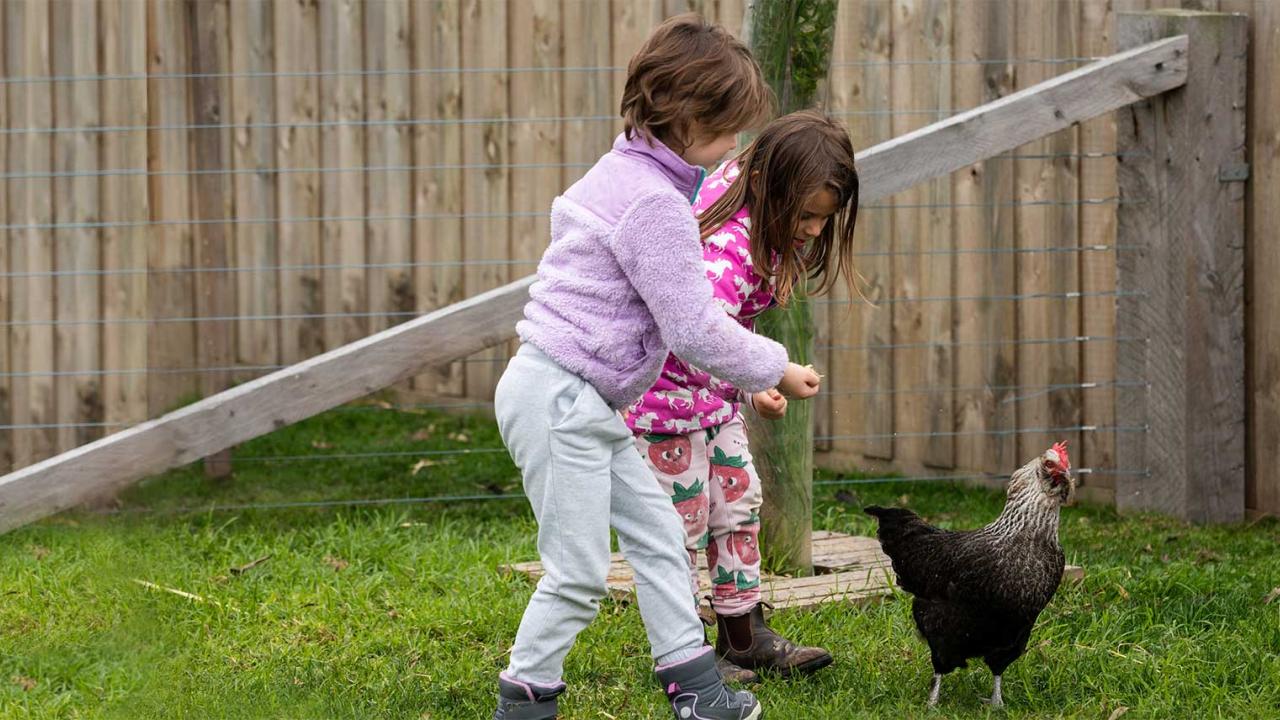
This webinar explores the role of schools in preparing young people to respond to the challenges of climate change and sustainability. Drawing on research and practice, Associate Professor Peta White highlights the importance of a multidisciplinary approach to climate change education and shares strategies for building critical thinking, student agency and student voice, helping schools foster more empowering and hopeful learning experiences.
By watching this webinar, you will learn:
- Why climate change education should be multidisciplinary and shared across learning areas.
- How an approach grounded in critical thinking, student agency and student voice can empower learners.
- Why teaching should move beyond focusing only on the impacts of climate change to supporting hope and action.
Length: 01:25:41
About the presenter
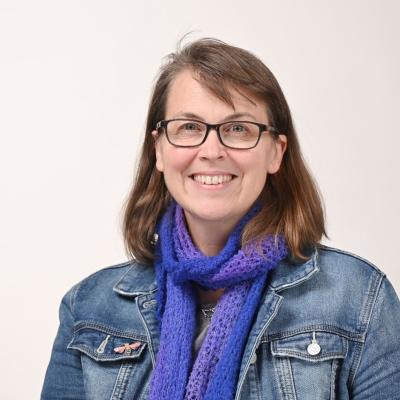
Peta White is an Associate Professor in Science and Environmental Education at Deakin University. She is the Co-director of the Regenerating Futures Faculty Research Group, a transdisciplinary collective attending to Anthropocene challenges and decolonising practices while also building researcher capacity. She is the Editor-In-Chief of the Australian Journal of Environmental Education, led the OECD PISA 2025 Science Framework’s environmental science contribution ‘Agency in the Anthropocene’ and is currently collaborating on the OECD PISA 2029 Climate Literacy Framework. She is active in climate action education research and advocacy.
Transcript

Download

Climate Action Education
Associate Professor Peta White
Transcription from video: Thought Leadership Series: Climate ACtion Education 2026 (Edited)
- Good afternoon, everyone, and welcome to the Academy's final thought leadership series for 2026. My name is Monika Gruss, and I'm one of the principals and residents here at the Academy, and it is my absolute pleasure to open our webinar on climate action in education with associate professor Peta White, who will be providing advice on how to take a confident approach to teaching about climate challenges. Before we begin, I would like to acknowledge the traditional custodians on the lands on which we are currently learning. I am learning on Wurundjeri Woi Wurrung, country of the Kulin nation, whose people have lived and learned here long before us, and I pay my respect to their elders past and present, and 21st Nations who are learning with us today, Wominjeka. I would now like to invite everyone to take a moment to acknowledge in the chat the country that you are learning on. Today's session with Peta White aims to help to take a confident approach to teaching about climate challenges. We'll be exploring evidence-based strategies and examples of embedding environmental sustainability as a cross-curriculum priority from primary and secondary school settings.
Firstly, a bit of housekeeping. This webinar is being recorded and will be available via the academy's website. Your image will not be visible in the recording. If you would like, you can activate closed captions by clicking on the CC symbol, which you can find at the bottom left of your screen. We encourage you to participate in the session by submitting your questions for Peta via Slido. This will appear in the bottom right of your screen, or you can use a QR code to submit questions using your phone. The chat feature has also been enabled, so please feel free to use it throughout the session. Unfortunately, we won't be able to have time to get to all of your questions, but if you make sure to like the questions of most interest to you, we will prioritise the most popular questions. We will have a short feedback survey at the end of the session, and we would love to hear your feedback about today and what you'd like to see in the future from the "Thought Leadership" Series.
It is now my pleasure to introduce Peta White, our guest speaker for today's webinar. Peta is an associate professor in science and environmental education at Deakin University. She's a co-director of the Regenerating Futures Faculty Research Group, which is a transdisciplinary collective attending to the Anthropocene challenges and decolonizing practises, while also building researcher capacity. She's the editor-in-chief of the Australian Journal of Environmental Education, and she led the OECD PESA 2025 Science Frameworks Environmental Science Contribution Agency in the Anthropocene, and is currently collaborating on the OECD's PISA 2029 Climate Literacy Framework. Peta is active in climate and action, and research and advocacy. Peta's research leadership has three narratives, science and biology education, sustainability, environmental and climate change education, and collaborative activist embodied methodologies. And now I warmly welcome Peta White. Over to you, Peta.
- Thank you very much, Monika, and welcome everybody. Thank you very much for joining me today to talk about climate action education, a transdisciplinary approach. As I get started, I too would like to acknowledge the country that we're all standing on today. I'm sitting on Wurundjeri country and would like to pay respects to the traditional custodians of these lands. I acknowledge that country was never ceded, and I hope you acknowledge the traditional owners of the country you're on in the chat. Thank you for doing so to those who have. I also want to take a moment to acknowledge that these are challenging times that we're in, and the topic of today's webinar are big topics, and they may feel uncomfortable as we explore our citizenry responsibilities and our educator responsibilities. So I encourage you to lean into it and let these discussions engage you and entice you as we become the kinds of educators that we need to work towards sustainable futures for all species and beings. I'm starting out with a reminder from the IPCC, the Intergovernmental Panel on Climate Change Education. And I'd like us just to think about this statement that comes from their sixth assessment report, their synthesis report. It came out in March 2023. The statement is a warning that the pace and scale of climate action are insufficient to tackle climate change. I think that's the context in which we're working today. It's a very big, large context, and it can feel frightening if we don't understand what our roles as educators can be.
So in today's presentation, I'm going to take us through some of our key findings from the research I've been conducting at Deakin University with Regenerating Futures and my colleagues from Enacting Climate Change Education. We're going to think about power of policy and how policy enables us to leverage action specifically in the classroom and in broader education contexts. We're going to define climate change education and understand that definition as regenerative learning, and we'll get to learn some terms like metacrisis and polycrisis and find out why those terms are useful to help us understand the context that we're in. Then I'm going to spend about half of today going through some research informed practise to look at some of the outcomes that we've found specifically from our enacting climate change education research, and then some time for questions.
So the first section is really to focus in what are our key learnings from our research over the last three or four years? And I'll tell you a little bit more about how that research came about in time, but just to start out with the key learnings. So anthropogenic, or human-induced climate change, cannot be taught through describing or exploring climate impacts. So when we understand that it's the constant feeling of discouragement about hearing about this cyclone, this tornado, this disruption, this hazard, this expression of damage and harm to people, that kind of feeling I think is really hard for us to hear all the time. And I had this analogy the other day, it's like trying to understand our disease through only studying the symptoms. What we actually need to do is really understand what is climate change? What is anthropogenic or human-induced climate change? And why do we have it now? And more importantly, what is my responsibility as a citizen? And perhaps in our context today, what is our responsibility as educators to bring awareness about climate change and climate action and how we move forward? So climate or eco-anxiety is real. I know I feel it regularly and I'm confident you do too. And focusing on climate impacts is a way to make that feel worse, I think. So perhaps we can increase despondency and hopelessness if that's how we try and teach climate change. But learning about climate science or climate systems, allows us to understand that broader perspective of why this is happening, what are the systems that enable the climate systems to be disrupted, and what are our responsibilities to manage in those situations? What are the systems, the human systems that we're engaging with that allow us to see this a little bit differently and to focus on how we might change our interaction with our human systems? So there's a lot of learning, a lot of language. Let's have a look at some of that.
As I go through today and share ideas with you, I'm also going to throw a lot of resources your way. My intention here is to enable you to have this resource, my PowerPoint, at the end of the day, and to be able to sift through it and find the pieces that are useful to you, that enable you to go forward and do the kind of work that you need to do in an education context, if that's classroom or not. So the Climate Council is a fabulous place to go for resources. It's fabulous, A, because we know it's respected. We know that they're using scientists to develop their materials. They may not be engaging so directly with educators, but they're producing a lot of materials that we as professional educators can adapt for a classroom or education context. And I really want to acknowledge that we're working with and for our young people. So I think they need to be front and centre of everything that we think about. And to understand our context, let's say, in a secondary classroom, we want to be thinking about our local situation, so the ways that our young people are engaging locally with their ecosystems. I'll talk some more about that soon. Also, a shout out to the academy here. They have presented not only this though leadership series, but several others that have allowed you and provoked you and enabled you to think about your role as educators in this space. So we've got some really great ones that focus on anxiety in the classroom or disruption, the big scale existential disruption, or even the future of education. There's several leadership this series around that topic. So what a great resource that you have at your fingertips to be able to engage in deeper thinking about these topics.
Back to our research learning. So another key learning is that defining climate change education, or climate literacy, or climate action education, or even now regenerative learning, is useful to have clarity about what the learning might be, what the learning foci could be and what the action leading towards agency might need to be. So we'll unpack that a little bit. Environmental education, and now climate change education, are fields of research and practise that have been around for a long time. This is a fantastic paper that was put together by Arjen Wals and Aaron Benavot, and they shaped how the field of environmental education has grown, flexed, and adapted since its inception in the 1960's. Initially, it was very much about point source pollution and activism and how do we engage in understanding the localised complexities of what's going on in our ecosystems. In the 90's, we started then thinking about how to pull in a broader, more complex intersection of our eco-earth systems. And then we had the decade of education for sustainable development, and we saw the United Nations language of sustainable development come into the field and shape it and frame it in important ways. And we resulted in the sustainability development goals, the 17 goals that frame how we understand sustainability today. A great set of goals and very useful, although for me, they are a bit tricky in that they're based on goal eight, which is all about growth, economic growth, and that growth is framed as being unlimited growth, which for me, me and many people, doesn't work when we're talking about living in a finite system, which we are as an Earth system. So today we're moving more into an environmental and sustainability education, appreciating that complexity, appreciating that there are Earth systems and human systems and they're coming together, often entangling negatively, and that's what we need to understand and work towards. And then I would add that climate change education is weaving in towards the end as a similar, but not necessarily the same. I definitely do not see climate change education as a replacement name for environmental education. They sit side by side for me, importantly. "A Climate Change Education Takes a Bit to Unpack." This was a fantastic lecture I gave a while ago, and Ray Eckermann, shout out to Ray, graphically recorded my lecture and this was his graphic that came out. It's a fantastic representation of a whole range of things, some of which we're going to touch on today. So a really nice useful tool to be able to tease out and yet dig into some of the important aspects of climate change education.
But to define climate change education clearly, again, we've worked with Ray to help us form graphics and an illustration of being able to understand climate change. So we want to be able to work through the idea that we're dealing with Earth systems. So our students in year 11 who take environmental science learn the Earth systems very clearly, but there's a lot of complexity and nuance that we don't necessarily get to in a curriculum context there. There's a lot more richness and that real heart of complexity that we can certainly dig into, but we have these Earth systems. And at the moment, they're changing at unexpected rates and due to human impacts. So that's the next part that we need to understand, that our human systems are negatively entangling with our Earth systems and working out what our human systems are, how do we understand them, and therefore, how do we take action to change them, to learn to live in more harmony with our Earth systems. That's the work. An important piece of climate change education or maybe climate action education, or maybe climate literacy, as I'll show you in a moment, is to be able to use evidence or data as evidence. It's very much about being able to understand the graphs, or the science, the climate science that tells us that we are in a period of significant change and to understand what that change is, to be able to then understand why we have that change, to be able to understand what we need to do about it. So it's really important that we see data as evidence. And then we learn to take action. So how do we make those changes to our human systems, which may involve personal change to how we choose to do life. It may involve how we manage things in a community, perhaps in our school community. And ideally we're working towards developing agency and that agency is a set of skills, and dispositions, and attitudes within self that allows us to learn how to right size our interactions. And a shout out to Anne Poelina, a fantastic academic, a Nyikina woman from the Kimberley in Western Australia, who helps us understand through indigenous perspectives how we might learn to right size, to live appropriately within our Earth systems, within our ecosystems. It's striving for that rebalance that is the work we need to do. And it shifts the focus of our science education into a really interesting social science perspective. It draws in our geography thinking. It uses our tools and practises from mathematics, from design and technology, from the arts, as ways of helping us understand what is the context that we're in, how are the Earth systems changing, what are our human systems, and how must they change to learn to right size? So there we have our definition. We're going to work on that for the rest of this webinar. If you would like to know more, there's some reading here that you can access. These are academic articles, although the one about empowering young people through climate literacy from the OECD is a brochure that came out for the COP a couple of years ago, and I'll tell you a bit more about that in a moment. There's also a special issue that Russell Tytler and I put together with research in science education, a fantastic Australasian journal, academic journal. And so there are many articles in here that explore these ideas in quite some specificity. So you will definitely find something in here to ignite your interest and to be really along the lines that you're curious about. So I encourage you to take a look here. Some of these, most of these will be open access, which is fantastic. Of course, if they're not, find someone who has access to an academic library like me and ask them to access those articles for you. It is important that you have access to this kind of information and make time to read it.
So onto our research learnings. Exploring narratives of planetary boundaries framework enables us to focus beyond only climate as well as to understand the complexity. So I'm going to talk a lot about complexity this afternoon, and a really useful tool we've found lately is to use the planetary boundaries framework, which accurately positions climate change as only one of the many things that we actually could be thinking about. So the Stockholm Resilience Centre is working out how to collect data about all of the aspects that make up these nine spheres or elements of the sphere. And they suggest that there are safe operating zones where we can have some of these actions happening, like an increase in CO2 concentration, for example, to a safe operating zone, but then we might exceed that. And if we exceed it, then perhaps we need to look at our systems and understand how we're exceeding it and what we need to do about it. You can see that there are some areas here like stratospheric ozone depletion that have not exceeded the safe operating space, but you can certainly see that climate change has in a couple of specific measurements, as have many of the others like our land system change. Now, novel entities is a really interesting aspect, so I encourage you to take a look at what are the novel entities, but our plastics pollutions tends to fit into that space. And so there's lots of work to be done here. What's important about understanding the planetary boundaries framework is that it gives us the tools, the evidence, the data to be able to see change over time within relatively short time. When we're talking about a term like the Anthropocene, we're talking about a geologic epoch. So the epoch we are currently in or have recently been in, depending on what kind of geologist you are, would be the Holocene, which has been, you know, millions of years. And so we're not talking about quick time when we think about climate change. But when we think about human induced climate change, we are talking about a quick time and it's the rate of change that's really important with anthropogenic or human-induced climate change. So tools like the Planetary Boundary Framework allow us to see that change over a very quick time. Some of this change might be because we've got better at collecting the data to show the evidence, but some of it is that we've actually probably got better, worse in living in our human systems and engaging or disrupting our Earth systems. So tools like this can be really useful. The lowest website on this page is a quick Instagram, I suppose, that Johan Rockström made for us for COP30. And it's a very succinct, very short summary of what our challenges are internationally and what we must do about it. And he focuses on our carbon addictions and how we need to go about changing and re-syncing our Earth systems in terms of carbon. So we're doing a lot of thinking about human system mapping, and this is a great map that one of our third year bachelor of science students produced in a project I was working on them with. And as you can see, it focuses on beef production, but then explores that system. And so what we're doing in a lot of our work these days is mapping our human systems so that we understand the complexity of them. And by appreciating that complexity, we get that there aren't simple fixes. We aren't just changing the system easily by perhaps all becoming vegan. The complexity of the situation means that it's not a simple solution and we need to work with that complexity to understand the multiple ways that we can engage in creating change in our human systems.
So let's look at another major learning. This is about managing misinformation that requires critical thinking skills to be applied to evidence claims, multiple evidence claims, to assess their accuracy and reliability. So these skills can be learned and they take practise, but we have many tools to help us, especially as educators, to think about how we do some great work with our critical thinking skills. This report was put out in 22, 2022, with some great colleagues in the science education world and it's called "Science Education in an Age of Misinformation." So I recommend this to you. I also, in Australia, in Victoria in fact, we're really lucky to have our colleague who's produced this resource, the "Cranky Uncle." And this is an app that you can use on your phone. This is by John Cook actually is the author of this work, the researcher. And in this app, it presents a really great framework to understand misinformation and how misinformation is purposefully and intentionally produced to confuse us, to obfuscate the truth, to help us not understand, with clarity, the complexity and the reality of the situation that we're in. So it's our role to learn those strategies and to meet them head on and to be able to work with them in a situation where we're presented with evidence.
Another research learning we've had is that political advocacy and learning to speak to power, that also involves skill development and ways that we can express agency. So learning to speak to our power and to develop our personal and collective agency are key strategies that we can focus on in education contexts. I would also suggest in this space that our young people now are quite different to how young people might have been when I first started teaching. And my colleague Joseph Ferguson and I collaborated with two leaders from the School Strike for Climate Movement in 2019, and we co-authored this incredible paper, I think, where we showcase their thoughts about why they stepped up to be a leader and what they understand about climate and our futures. So I encourage you to take a look at this manuscript. You can access this from the Australian Journal for Environmental Education for free. It's open access at the moment. There are a number of projects going on at the moment that allow us to think about where does the power and the policy need to shift and change? So this was a project I led in 2024 that is ongoing. It was quite a complex project. We had a lot of partners. We produced a speaker series. We held a one-day summit. And from all of that information, we have are now putting together a strategy where we keep this political advocacy work going forward. So that's the kind of work that colleagues and I are doing. If you're interested in being involved, you are very welcome and we'll get some information out through the Australian Association for Environmental Education who are going to take on leading this project with me over the next few years. It's a very exciting space. There have been a lot of work done to understand how do our policies in Australia stack up against the rest of the world. And this curriculum policy analysis explored six countries. You can see them there listed. And we came up with these findings that all of the six countries attend to climate change in some way, but it's the very specifics about whether they look at climate change as a geologic expected process or whether they focus in on anthropogenic human-induced climate change. And often, it's the context or the location of the mention of climate change in the curriculum, whether it's in an elaboration in Australia or whether it's actually mentioned in the outcome, that really matters. So we did that kind of analysis to understand that Australia has some affordance in our curriculum to support classroom teachers to attend to climate, but perhaps there's an opportunity for a greater breadth and depth of climate specificity in our curriculum. And so we're working with our political leaders to understand the need for that specificity and to work towards establishing that in our curriculum. And then a key piece or a core piece, after you have that in the curriculum, is to understand how to use it well in the classroom context. And I'll share some resources with you about that soon. There's some great reading to do around the policy in Australia context and my colleague, Annette Gough, whom I'm sure many of you will recognise as a leader in our field, recently wrote this great piece for the Australian Journal of Environmental Education called, "Changing Politics for Changing Times: Rethinking Research Stakeholders and Strategies for Environmental Education." So I encourage you to take a look at this open access, so free to access academic article, to engage with the narrative of where Australian has gone with its policy around environment and now climate education.
So now back to our learnings again, to change the focus to appreciate Earth systems, how they entangle with human systems, and to explore the local expressions of those entanglements that we might call a socio-ecological challenge. And it's in understanding the complexity of that socio-ecological challenge that we can find ways to take action and have agency. So a socio-ecological challenge might be a contemporary or a relevant new term for what we might have called an environmental issue. But if we continue to call our challenges environmental issues, it makes it sound like our environment is behaving badly, when in actual fact, it's a socio, as in human, socioecological challenge. So it's a human and ecosystem challenge where things are not aligning as perhaps they should. And as a human in that system, we can look at our systems and understand how to bring change. And obviously, critical thinking is necessary here to understand that complexity. So my fabulous colleague, Joe Ferguson, generated using Gemini, this really interesting graphic of the Anthropocene to try and position for us some of the complexity of what this term might mean. Now, some of our geologists have not agreed that we have shifted in our geologic epoch into the Anthropocene, but I think in a public political sphere, we probably acknowledge that we are definitely moving in that direction. So this is a useful tool for us to be able to see what are some of the complexities we're dealing with.
The two terms I want to introduce to you are the metacrisis and the polycrisis. So the polycrisis will start there. That represents the multiple crises that we're experiencing across our landscapes and our ecosystems currently. It could be about land use. It could be about climate impacts. It could be about economic stability. It could be the sixth mass extinction and the focus on our biodiversity loss. All of those aspects result in a crisis or an issue that we understand in its multiplicity, its complexity as being important. It's not any one of them that matters on its own, but it's the fact that there are multiple that create this complexity and need to understand the system, hence the term metacrisis, which is an understanding how and why we're able to have these multiple, or polycrises, impact our lives, and of course, our Earth systems. So it's the ability for decision-making or for misrepresenting the complexity or misrepresenting the truth of a matter. These are all the post-truth practises that enable the metacrisis, or that are the metacrisis, I think. So the meta picture of understanding how we're able to have each of the crises that make up the polycrisis. This language is helpful for us to be able to shape and understand what's going on out there. As is this fantastic graphic that also comes out of a recently published article in the Australian Journal of Environmental Education. This is a map of the climate narratives from 1960 through to 2024. And I'm sure you'll recognise some terms in there that you will have heard from the media or from things that you've been reading, but they really beautifully map how things change and develop over time and how our understandings deepen, as does our situation of criticality, of critical need of crisis. So Joe, again produced this really great graphic with Gemini to represent how we can look at our human systems and our Earth systems entangling. And there are some positive entanglements, of course, but it's the negative entanglements that cause the disruptions. So it's really being able to understand where is that place, that opportunity for us to rethink our practises and to stabilise or reestablish a stabilised way forward.
So then our research learning has also helped us to see that taking action in a local or community project enables cross-generations and diverse perspectives to be importantly recognised or recognised in important ways that support young people to build agency. And it's that sense of taking action and developing agency, individual and collective, that is just so important in this space. All that we do to understand the complexity of anthropogenic or human induced climate change is really to drive us to understand what are the local socioecological challenges and how do we take them on.
There are three ways I think that we come to change and I've been talking a lot about needing to change today. So those three ways are through mandate, through government policy, through decisions that we make for ourselves, for our communities about how we will practise. So mandate. Or of course there's crisis, and you've already heard today that we are in a polycrisis, that there are many crises out there. And of course, there's the third way that we're all here to hear about today and that is education. We can educate ourselves out of these crises, finding new ways to appreciate the complexity and think about how we move forward. So what I've noticed over the last few years is that education is not often prioritised as a way forward in our climate adaptation or mitigation strategies and yet it should be. So this is my shout out for us to speak together, to hold our community, to suggest that education is the way forward. And we've got some thoughts about what that should look like. So understanding what the change might look like in a system can be really hard, especially in the multiple and complexity of human systems. But Annie Leonard and "The Story of Stuff" have done a brilliant job, for years, to show us what that might look like. So I highly recommend that you engage with "The Story of Stuff." It's a 20 minute animated, very clear narrative about what's gone wrong in our Western societies. And then the next video is "The Story of Change." And by the time we get to the third narrative in this particular series, it's "The Story of Solutions." And these three hang together to help us see that there are ways forward. We can work together. We can develop action and agency projects and strategies that help us learn to live differently. "The Story of Stuff" and Annie Leonard have done a lot of resources in this way to help us understand particular aspects of the human systems that are causing trouble. But these three are three that I highly recommend that you engage with.
Now there are a number of other resources that we can explore. We're going to talk a little bit more about curriculum. There are some leverage opportunities that we have coming from international policy. We can understand, as I've mentioned already, our local socioecological challenges that ground and really localise our understanding of the complexity of these issues. And we can work together with our policymakers and our educational jurisdictions to really think about how we're going to adapt to, take up a climate complexity, a climate challenge in the work that we're doing. And ideally we want to support our schools, our teachers, and our students and communities to feel agentic, to be able to professionally learn about these contexts, to be resourced, to know how to take action in the classroom setting, pull in the communities to take that action, and empower our young people as central parts of our community to move us into sustainable futures.
So the opportunity here is regenerative learning and it's, as I've mentioned before, learning to right size, to sustain our practises and our ways of being, to think about our sustainable futures. So we're thinking about how we generate transformative education in times of the polycrisis. And of course, socioecological challenges must be understood as local expressions of the complexity. So we aspire to socioecological integrity or ecological integrity that allows us to have a future, us being humans and all species. Of course, humans are not at the top of our ecosystem pyramid. They are firmly embedded in the middle of it, or in a place in it, in part of that system.
So our question for today is how does a teacher feel prepared and resourced to enable quality exploration, action-based engagement, while retaining a sense of optimism for the future? Let's spend the next bit of time looking at some examples and thinking about what that might be like in your classroom. We're going to pull back initially just to a quick policy scape and then dive into some examples.
So there is leverage and support for us in Victoria from the international policy field. I'll explain that in a moment. I've already mentioned a little bit about the Australian policy, but we certainly have policy in place, but we have opportunity for new policy. So there's projects underway to establish that kind of new policy. And in Victoria, we have some great policy. We're actually in quite a good policy landscape. I'll tell you about that in a moment. But the draught adaptation action plan has just closed for consultation and we're hoping the actual adaptation plan comes out soon and education is one of the key systems. So that's great work, Victoria. We also are really proud of and pleased with our Resource Smart Schools strategy. So shout out to my colleagues at DICA. They do an incredible job and run an incredible programme. And we must maintain this programme across Victorian schools because it enables us to be supported to do this work. It's essential that our teachers in classrooms have people on the ground to support us to do this really important work, to maintain that very localised focus, so that we're working in intergenerational, socioecologically imperative ways to be able to do this work. And of course, we know that school leadership is important in this space, as are our passionate educators who lead the charge or working to build the capacity of our community.
So this is Victoria's draught adaptation action plan. It's just finished its consultation period. You can see in the graphic that they list eight systems of importance in the adaptation plan, and the education and training is one of them. So I hope that you knew about this and participated in the consultation process and we're all looking forward to seeing what comes out as the final policy. But this is an important tool for you to be able to think through what are the systems that you engage with daily? So if that question is a bit challenging for you, come to this work from our government and they give you some examples and ideas to work through. This is a really important space to keep watching. There'll be some great work come out of here.
And then we must think about learning how to use all of this thinking to speak to power. And how do we do this in schools? Well, we use our international policy to leverage good curriculum in Australia and in Victoria. We have well-informed curriculum. We design additional policy beyond curriculum that allows us and our school communities to be climate action hubs. We enable school leaders to be passionate and to support their passionate teachers to do the good work that they need to and want to do. And we enable our young people supporting them to live into their agency and be able to take action.
So I'm going to tell you a quick story now about our international policy and where that leverage comes from. So it comes from the OECD, the Organisation for Economic Cooperation and Development through the PISA, Programme for International Student Assessment, which is the assessment that 15 year olds around the world will take so that countries can determine how their education processes are serving their young people. It's a controversial assessment. Australia is participating in the programme, but what many people don't understand is how that programme is educationally really important to what happens in Australia. So prior to the assessment happening, for example, last year we assessed science. We assess in mathematics, reading and science. So last year it was science, but five years before the assessment happens, an expert group is conducted around the world, eight people that come together and they explore the science framework. Now in Australia, we are really lucky that we have a representative who sits on that expert group. Russell Tytler is our Australian representative. Only eight people around the world get to be involved in that conversation. So thanks Russell for your service in that space. Now in the 2025 framework, the OECD demanded that environmental science take a priority as we work out what to do around our climate context. So the work that was done in the science framework finessed these three competencies. And so exploring phenomena scientifically, constructing and evaluating designs for scientific inquiry and interpreting science data and evidence critically, and research, evaluate and use scientific decision information for decision-making and action. So you can see how important those competencies are for our young people moving forward. Now in the environmental science work that they did, they actually struck an additional expert group. There were four people from around the world and I was lucky to lead that group. And so we came up with these three competencies and they were used across the PISA assessment, but not all in the initial or the main student assessment. So we looked at explaining human impact interactions with Earth systems, sorry, the impact of human interactions with Earth systems, again about making informed decisions to act based on evaluation of diverse sources of evidence and application of creative and systems thinking to regenerate and sustain environments. So that's that interactive piece. And then demonstrate respect for diverse perspectives and hope in seeking solutions to socioecological crises. So these competencies I've just read out, these six competencies, they are science education from an international policy level. And what we now expect to see is that framework come down and inform what happens in our national curriculum and therefore, in our state or territory curriculum. So this is a representation of the key ideas that are in the science framework, in that international policy. And this is the piece of agency in the Anthropocene, the specific definition that we wrote for the environmental science piece, those final three competencies that I just read out. You can read the Agency in the Anthropocene support document. It's 40 pages of history, explanation, example, what you might do in your classroom with your lower secondary students to prepare them. And the intention is to work at unpacking this definition of agency in the Anthropocene. And I'm just highlighting the key blue bits for you to take a look at and appreciate that this is our science education international policy. We have the affordance to make the changes that we want to make in a curriculum policy position. We can build in some very really useful thinking into how we understand science education and how we practise it in our way forward. So I encourage you to take a look at this document, to read into it and reflect on your practise and where your opportunities might be to engage in some of this really contemporary science education. And if you're not in science education, then this is the next framework that's in development right now. Last year we produced the climate literacy framework, which was a preliminary draught. This is for PISA 2029. So again, we're still talking international policy and this time it's around climate literacy and it's not disciplinary specific. So this is no longer only in science education. This is setting policy for all disciplines across all of our schooling systems. And you can see here that we have four competencies. Understand and explain human-induced climate change, apply evidence-based system reasoning to climate challenges, evaluate arguments and perspectives on climate change, and exercise agency for climate futures. And of course, if you look at this document, you will unpack and understand those competencies in greater detail. So this work is about to start revision towards establishing the final framework that we hope will be released at COP in November this year. So this is a watch this space. The final framework is coming out soon, but this is absolutely contemporary work and it's how we understand the international policy that can then inform our national curriculum, which will inform our state and territory curriculum.
Now there are other resources, other research informed resources that are coming along to support us in ways to make these changes that we need from policy, specifically curriculum and beyond curriculum policy. So this was a report that came out recently. You can see A squared E squared was involved here with colleagues from the Environmental Institute of Australia and New Zealand, EIANZ, as well as our New Zealand Association for Environmental Education. So this is an evidence-based, so data collected from a survey and from conference workshop practises. And we work to define the current situation and suggest ways forward where we focus on regenerative learning. Recently, our Australasian Science Education Research Association has produced a white paper that talks about a science education that is fit for the future. So this is a way to help us understand what must we do in science education to ensure that we're educating our young people for a future that they can cope with, that they can lead in, that they are going to generate even more futures. Similarly, our Australian Science Teachers Association has written a paper that we're calling a call-to-action about what is it that we need to do with regard to climate in our curriculum and school practises. So I encourage you to take a look at all of those papers. And as I mentioned earlier, we have a Peak professional organisation in the Australian Association for Environmental Education to join, to have your voice heard through this association, to do the work, to bring climate literacy or climate action education to the front of mind in an education context, to generate the kind of change that we need to see. There are other professional associations, for example, GTAV here in Victoria, who are also doing some great work. And this is an article I wrote for them in the Interaction Magazine in 2024, and they're constantly producing really great work with excellent colleagues to help us think about how do we bring this kind of international policy, this kind of international and local research to life in our classrooms.
So what must it look like in our classrooms if we use research informed practise? Well, there are a number of projects I'm going to swing through now. Some of them I'm going to go quite quickly, but they are all rich and beautiful and I hope that you circle back and engage in some of them and reach out if you want to know more. One of my key calls to you is that if you're not sure how to step forward in this space, use some of these resources. We produce all of our resources to be freely shared for you to download, adapt, and use with your young people. And then if you like, tell us about it. And if you're not sure how you want to start using it, talk to us. We are always looking for schools to engage with. We want to do this research with you in your classroom. We then adapt, and revisit, and then we share. So research is a really nice way for you to feel comfortable in moving forward in this space. And many of my colleagues across many universities are doing this kind of work. So please don't feel that you can only get to Deakin to do this great work because we're leading the charge. Many universities are doing this work around Australia.
This is a particularly great project though. This one is called "Artefacts of the Future." And the intent here is to support young people through a teaching and learning sequence to think about their position in their human systems now and what they might need to see changed if we're to anticipate or hope for a sustainable future by 2050. And the artefact that they design is something that would reflect the changes that were needed to be made to have a sustainable future in 2050. So I'm going to show you a few of them. This one is called "The Happy Home," and it was constructed by a group of young people in a rural context who thought carefully about what might it look like to live in 2050 and what are some of the ideas, the practises that we needed to have in place. So they were thinking a broad set of systems, through a broad set of systems that enabled the kind of living strategies that would help or ensure, pardon me, that our society makes it to 2050 and thrives in 2050. This student focused on composting as a strategy that they wanted to look at. So compost power, the way, and the text on the page is the artist statement. So we take images, we go through a workshop of supporting young people to develop the artefacts and then they write their artist statement and it's through the statement that we get to interpret their work. So we don't just look at their artefact and think we know what they mean. We actually engage the young people in telling us what their artefact is about. And here's one final example of another clear focus on what we must implement in our living strategies to ensure that we can all thrive and survive with sustainable futures.
Another key piece of work that we did a little while ago now was thinking about the skilled future of work. So the "100 Jobs of the Future" was a great project where we interviewed several key people around the world about the future of work. We synthesised those ideas about what's happening in our work futures, and then we creatively generated 100 jobs that would exist in the future. This work was conducted in 2018, and it has been a joy to see that many of those jobs have actually come to fruition. And I won't spoil your enjoyment of searching through those jobs, but if you go to this website, there's a tool on there, a quiz that you can work through that surfaces some jobs that might interest you, and then you can start exploring those 100 jobs. But it's a project that I think is very creative and yet completely research-based and has had some really great outcomes to support our young people to think about their futures.
There's a lot of reading out there about how you might use particular pedagogical strategies. This was a book I produced with two colleagues to think specifically with science and drama. So how do we create new opportunities of learning by entangling science and drama learning? So there's some really great international examples through this material. Similarly here, another great strategy to look through is socioscientific issues and sustainability education. So again, another international collection of chapters and great examples about how researchers have been collaborating with participants to engage in thinking about socioscientific challenges and how we take those up in an education context.
We have colleagues around Victoria doing incredible work around bushfire education and disaster risk reduction. So a shout out to Harkaway Primary School who has been leading this space for a number of years and working with the CFA to do some really important work. I know Upwey Secondary College is also taking up this space and doing some really good work with Briony Towers. It's a really obviously important space for Victoria to think through how do we prepare as a community for some of those climate impacts that are coming our way. Again, it's climate impact that we're looking at, but we're understanding it through the systems narrative. We're looking at how does bushfire fit into our systems? How do we understand the data? And then this piece is about how do we prepare ourselves through taking action to have agency, so that in a bushfire zone or a bushfire season, we know how to be prepared and how to act.
At Deakin, we've been doing work for over a decade about how to infuse contemporary science into our classroom, specifically our science classroom. So I recommend this plethora of resources to you. We divide them up across the disciplines of science, biology, physics, chemistry, Earth space science, and some other really interesting areas in STEM. So I'm confident you'll find a fantastic scientist in here that some teachers or pre-service teachers have designed some teaching and learning materials around and that you will be able to adapt and use in your class. I really encourage you to take a look through some of this incredible work.
We've also done some work with Hycel, a really important hydrogen energy facility out of Deakin University that is thinking about the place of hydrogen energy in our energy transition. So again, a very specific example of how we understand the transitions that our societies will need to make, the systems change that we'll bring to extracting ourselves from our fossil fuel practise.
And now I'm at the point of wanting to tell you a bit about our Australian Research Council Discovery project called Enacting Climate Change Education. This project is in its fourth year. It's been the key learning point for me in terms of the introductory lessons that I shared with you at the start mostly came from within this project. You can find out more about this project by exploring our website. Everything in there is free for you to read and look at. And here's my incredible team that I get to work with in this project. So a shout out to everybody here and hopefully I'll introduce you to them as we go through the work.
So the project is international. We have colleagues in Taiwan and Finland who are doing similar work and we meet regularly to talk about what we're learning and what the implications of our learnings are in a school context. We're working with year five to year 10 students in our Australian project. We're working to transform science curriculum and practise and pedagogy. And we do that by considering contemporary climate related science and developing science inquiry practises and supporting student and teacher agency. A key learning was that we can't work towards student agency if we don't also enable teacher agency. So an important part of me being here today is to encourage teachers to learn to have ways, and strategies and tools, to develop your agency in this space. We engage scientists to support us to develop teaching and learning sequences. We work with teachers to use these sequences in their classroom and we engage with teachers and students to then learn with them about the success of our sequences and we redesign, adapt, and repeat trial. We also do work across initial teacher education to ensure that some of our pre-service teachers come out with these skills on board already. Excuse me. We're using a design-based methodology and you can find out a bit more about that by engaging in the slides or looking around at other projects. Our colleagues in Finland, Maija Aksela from the University of Helsinki, is doing some really important work with the Finnish scientific research community, and has a long history of co-design with teachers. And Ying-Shao Hsu from the National Normal Taiwan University is researching socioscientific issues with her colleagues and schools and teachers. They're having a really interesting time looking at heat island effect, which is particularly relevant in a Taiwanese context. So shout out to our colleagues.
We've done a survey of science and humanities teachers in these three countries. We've done an analysis of science and geography textbooks in these three countries. As I've mentioned, we've co-designed with teachers and students in these learning situations. And we're building on adding to the literature, importantly, to keep our findings out there and useful for others to build in their own research.
So we're taking on the idea of climate change education, and this is a little bit from the survey, I suppose. We had some great responses. The data collected was in February to April 2024. We had 221 responses. This data is really just to say that our teachers think there is an urgency to position climate change in the curriculum. Some of the statements here, qualitative statements, indicate that we really must support our young people in this space. We asked questions about how teachers felt about teaching aspects of climate change, and we could see that there was some preparedness, some confidence, in fact, in knowing climate change effectively, being able to teach it, to anticipate learners' misconceptions, to think about effectively addressing learners' misconceptions, etcetera. So then we asked about confidence and we found that our teachers really feel relatively confident, but when we've dug into that in our work with them in the classroom, we see that that confidence might be a little bit surface and that when they think about how to go about engaging in these very big topics, further resource and research is needed.
Our textbook analysis revealed that, sorry, in countries like Australia, there is a mention of climate change, but it's the depth and the application of context around climate that are important to consider. Excuse me. So the methodology there was to take a selection of textbooks to learn how to code for exploring climate themes through the textbooks and then to conduct that analysis and validify it because obviously we had multiple colleagues doing that analysis. And the comparison here across countries is really quite interesting. And we see that Taiwan has had a long history of including climate context in their textbooks. Finland, quite a long history too, but Australia really not so much. So we've got an opportunity here to work with our textbook organisations to help them to infuse more work in this space in the textbooks. And if you're using textbooks in your education, in your perhaps science teaching, then maybe you want to have a think about the fact that they don't represent perhaps enough climate context and maybe there's some work to do to augment that presentation of information. So there's a lot more to share in that finding. We have papers published that you can engage with.
In terms of what comes out of our co-design, I really wanted to share with you that we have a number of really great sequences now that we're putting up online for you to download, and adapt, and use. They include an introductory sequence where we prioritise climate modelling. We've had some really lovely time looking through bees and frogs for biodiversity climate challenges. We've looked at energy transitions. We've looked at natural disasters and astronomy because it forms a key practise in primary science. And we've done some great work with Year 10 to look at environmental science through, thinking about the pedagogy of case study. We've collaborated with schools around Victoria and we've established this as our model for thinking about how to do this work. So we think this model will be particularly useful for teachers to be able to start planning how you might engage specifically around your socioecological challenges.
So if we have a look at the introductory sequence, you'll see how we go about teaching some of this climate information. And we're looking for curriculum links. We're thinking about systems thinking. We're focusing on learning about the self in context and we're applying innovative pedagogy as a priority. So we design PowerPoints to help guide and direct the lesson, but we're also making sure that we start with good practise. So what are our young people thinking already about climate change? How are they feeling about what they've heard about climate change? And we're using tools, especially Victorian data, to allow us to think about the context behind climate change. Well, it's the greenhouse effect, and in fact, the enhanced greenhouse effect. So there are simulations we can use to help us understand all of that. There are graphs that we need to understand at a glance, how to read and how to interpret, so that we're not confused and fall to misinformation. So appreciating what does it mean to look at a graph and understand it. We're thinking think about engaging strategies for learning, and one of them is to use games perhaps as a way for using, enabling young people to engage with the language of climate change. We're also looking at systems and how to read and interpret systems maps. Again, this is coming back to the really important data graphs that you see flash up in all sorts of representations. And so enabling our young people to appreciate that in fact, a graph in the right direction doesn't necessarily mean a correlation that's important. So here we're looking at global average temperatures versus the number of pirates. So it's that criticality that's really important in understanding the data that we're being presented with. And Victorian data is accessible. Thank you very much to our government departments. They're doing a good job to keep us in tools that we can use in our classroom. There's a number of graphs that we can access. The Climate Council does a lot of work around facts or myths. The IPCC presents some really useful information that we can access. This is a Climate Council representation, really thoughtfully generated. Quite a few videos that we can access. Again, they're important to watch first to make sure that they are presenting accurate information. And we can also dig into the policy piece, so around the Climate Paris Agreement to understand what's going on there. And of course, we have our mentors and our leaders in the field who help us understand the specificity of what's going on. These are some great Victorian data that's presented for us to think about biodiversity loss. So some really useful fact sheets and graphs and how that maps onto some of the key work that some of our colleagues at Deakin are doing specifically around the Baw Baw frog and phytophthora. And another case study here around our little blue penguin. So it's great to be able to use our local socioecological challenges to understand some of this work. Of course, citizen science is a very useful tool in the right context. We have a number of really great citizen science programmes across Victoria. So I encourage you to be looking out for them and finding ways to engage your young people in doing some community-based citizenry science that is really meaningful. This data is collected, it's verified, it's used, it informs our policy going forward. So what a great thing to have our young people involved in. And then we also use the idea of pledging and taking action personally, yet in a collective, to think about how we fit into our systems and move forward, how we disrupt things that are constantly presented to us perhaps through the media. And of course, there's always little tools we can develop and design to help us check in with our understandings. And this is a great tool that we developed, again with our colleague, Ray, to help us think through action now, what agency might look like and what a future scenario can be. So this is quite a nice strategy that we've developed where the illustrations are explained in our glossary. And then we've also got a series of maps where our young people can design their own decisions between what's the socioecological challenge that concerns them, what might agency look like, and what are we aspiring to in a futures context? So you can access all of those.
What we found in our work in the primary context is that we've been able to infuse climate, or climate education, across a science programme from years five to six the whole way. Now this is not doing it in unmeaningful ways. We haven't just smashed a climate context into everything that comes up. We've done it very thoughtfully. For example, when we've explored biodiversity, we've looked at the reasons around why biodiversity, specifically bees, but why bee populations are at risk at the moment and what some of the reasons for that risk is, and then what we might do about it in a school context. So I really encourage you to take a look. This is the year five set of sequences and then we have a set for year six as well. And this is some of the student work sample, but what we found out at the end was that our students were incredibly empowered and learned a lot and could articulate very clearly what climate change is and what our challenges are and what we need to do about it. And that was through having two years of science that focused meaningfully on understanding the climate context. So we know it's possible. And if you want to know how we were able to do it, it's on our website and we're happy to share with you those findings.
Some really lovely examples in the bee sequence here. I'm not going to go through them now because I want to tell you about the lower secondary work we did.
And as you will know, working with our Year 10's can be challenging. And we found in some of our initial expressions of this work that our Year 10's were like, "Yeah, we've heard about climate change. Don't really want to hear about it anymore." So we had to dig deep and think, "Okay, how are we going to meaningfully engage our young people in thinking through the context that mean the most to them?" So that's where we came up with the local/global, so a local issue that has a global expression around a socioecological challenge. And we used innovative pedagogy through a series, a multiple series of case study to draw in our young people to think about their local context and to think about how that might play out in an Earth system.
So in this case, we conducted the intro sequence, which I've just taken you through. We explored Earth systems using the planetary boundaries, and then we conducted a case study. And the first case study was a general one about fast fashion. Now the topic is very engaging. I think we probably all have something to learn in this space, but we were able to encourage the young people through these four strategies of the initial case study to think about fast fashion. And we felt pretty confident that most of our students became a bit interested and wanted to know a bit more. So our second stage of the case study strategy was to allow them in smaller groups to really dig in. It's that spiralling, deepening effect of being able to understand. And so we presented these eight plus case studies to engage young people in thinking more deeply. And then we came together as a class and that learning was shared across the class to help everybody deepen their understanding about fast fashion. And there's some really lovely work came out of the students there. But then our third round of the case study was to look at a local socioecological challenge related to case study. And in this particular instance, we focused on water and how water catchment is important for us as humans, but also for other species, for example, the platypus. And we also looked at local industry and how they engage with water. And we did some field trips to collect water analysis, but also to look at how water is managed sustainably by some industry in the local area. An incredible programme and a shout out to the school community that really enabled us to dig deep and explore an ultimate example of how this work could come together. And you can see for some of it through some of these quotes that our young people really did engage carefully with the idea of planetary boundaries, which we weren't really sure that it would work. And it did to a certain extent, but we still feel there's more we need to do there to help young people and all of us, in fact, understand and think in systems. So we're now really digging into that idea of systems mapping and how we can do that more easily to help us understand the opportunities for change that we have.
Certainly there was a lot to think around fast fashion and our learnings there. And our teacher quotes were really incredible at giving us the insight to what it felt like to work with their young people in this spiralling sequence of case studies, this deepening understanding and the sharing very relational way of moving our thinking forward. And we felt that we engaged with students in their sense of agency. So developing skills through action to develop agency, and our teacher as well. So I think there's lots of things that come out of that year 10 sequence that I encourage you to look at. And this model is definitely a tool for you to explore in thinking about how we might pull together our work in this space.
And I think I might finish up there because I'm really keen to hear some questions and I want to encourage you to take down my email address. You're very welcome to be in touch. A shout out again if you're curious about how to take on this work. We are looking for schools to do some system mapping work with us. We have a strategy written up and we could share that with you and you could adapt and engage with it if you felt it was relevant. How you adapt it is important to us. How you think about the work and what your students think about it is important to us because it helps us to then understand what are the next parts of the strategy that we need to unravel. And that's how our research works. We trial, we explore, and then we collaborate with our teaching colleagues and our young people, and then we learn and move forward to do it all again, and do it deeper and better, hopefully. So I encourage you to take a look at the materials. You have the PowerPoint shared with you hopefully. And I'd love to take questions. So thank you, Monika.
- Thank you, Peta. It was such a thoughtful look at climate action in education today. There was a lot for people to take away back to their own schools. The research you've shared with us tells us that this is complex and urgent, and it's deeply important work. And what we do with that is now up to us to implement in our schools. So thank you so much for sharing all that information. So now it is Q&A time. We've had a look and gone through some Slidos, so I'm going to start getting onto those. So first question is from Gabby and her question is, "With Victoria introducing new climate change requirements for schools, what do you see as the key elements of an effective implementation or action plan?"
- Give that one again. That was from Gabby and she wants to think. What was the first part? With Victoria implementing the climate action strategy.
- Yes, so what I'll do as well, I'm going to pop this in the chat for you as well.
- Great, that's handy, thank you.
- With Victoria introducing new climate change requirements for schools, what do you see as a key element of an effective implementation or action plan?
- Great question, Gabby. And I love that you've gone to action plan, because for me, I think schools are beautifully positioned to be leaders in their community for climate action. We've got some incredibly passionate and very capable educators out there. And I think that working with our young people, who are also incredibly capable and passionate, working in collaboration in community is a very good way to proceed. So the climate adaptation plan has one of the eight systems that it attends to is education. And one of the five elements I think of that system is to think about schools, how we manage with sustainability practises in our school, probably at this stage more so than adapting our curriculum. So I think a role that we have as educators in the Victorian system is to advocate for more curriculum, better curriculum, to enable us to do this kind of work. That's not a sense of complaint at all. It's just a targeted strategy that we would like better curriculum to enable all of us to be able to find places for climate action education across the disciplines. Then we need to be confident in ourselves that we have the understanding, that we've got the complexity, that we can read a graph to see how the earth systems are changing, that we understand our human systems that we're interacting with daily, and that we know how to unpack them with our young people. And we know how to take action to change those human systems and can move forward into feeling agency, individually and collectively. So that sense of taking those political speaking to power strategies and enacting them in our schools to form an action plan, just makes my heart sing. That's exactly what we need to do. Those action plans can be research informed. They can be very well connected across your communities. There are a number of people in community who are passionate about climate. I was speaking to our counsellor in our region here recently. He's all about climate. That was his complete platform. So wow, what a colleague we have in that space. So find out who your allies are, harness their energy. You will have lots of allies across your community and then take it to leadership. Speak to power and say, "This is what we need to do. We're taking up these local socioecological challenges in these ways and we're really looking forward to learning and having success with change." So great question, Gabby. Thank you.
- Absolutely. And I resonate with that as well. It's really important for us to touch base with our community. I know in my community as a principal that they're very passionate and I'm so grateful for their views and their education that they bring in. So valuable to share that with everyone. So thank you for that and I couldn't agree more. All right. Let's go and I'll share with you Lee's question. I'm wondering how the VTLM 2.0 element of supported application, especially in the support guided structured inquiry part, might facilitate climate change education, best practise and pedagogy. Oh, bit of a tongue twister there. Lee, here we go.
- Wow, Lee. [Monika] I'll put this in the chat. Great, thanks for that question. I think we've got an opportunity here, with a change in our system, to deepen the things that need to change. So we are experiencing VTLM 2.0. We're learning how to implement, how to enact this policy. It's a policy that enables us to explore in a science context through inquiry, which is a key part of our science curriculum, and other strategies as well. So by using and focusing on the key pedagogical strategies, we can weave in the other new, I suppose, climate focused aspects, the contexts that we need to learn. So I think it's an opportunity for change, Lee, having this policy implemented and we should embrace that opportunity. And remembering too, that one of our key things we talked about today was appreciating the complexity and learning the skills to speak to power. And so it's important that we retain that ability to give our feedback where it's important and necessary. And I think too, when we're looking at a climate context, as we started today, we want to think carefully about how our young people are managing through this particular context. And I find that this climate work in a classroom context, as you're probably very aware, Lee, is that it's very relational and that we do it through a local focus, focusing on our local context, working with our local communities, to understand exactly what's going on without having to externalise or focus on global issues that feel very far away for our young people. So I think all of that has enabled to help us deal with change. And I think probably we're all experiencing a bit of change fatigue. I certainly feel that I am. But by picking off the pieces where I feel empowered to make the change, and to challenge and question and implement change that's appropriate, that helps me get through that sense. I just will say, could it be the lens through which we keep inquiry front and centre? I think it has to be because I haven't really shared anything with you today that has been an absolute knowledge. It's the complexity that I've really forefronted for you today. And it's the complexity that I don't think any one person can hang onto at any one point in time. Therefore, we're all in a state of inquiry. And I definitely feel that VTLM 2.0 has not told us inquiry is not a practise we must implement in schools. We still have, as I said, we still have science inquiry as a key part of our curriculum. So we are enabled to practise and learn the skills. Remember too, the competencies that came out of the PISA framework, they are about decision-making. They are about research informed or information informed decisions. So we've got to be able to present data to our young people and develop skills and strategies to interpret misinformation and manage the content and our understandings in a series of systems that we can appreciate we need to take action in and generate change in. So thank you. Thank you, Lee, for those questions.
- Definitely. And I'd just like to throw it in, because we were talking a lot about teacher confidence as well. And I know that in your research, you found that Australian teachers are among the least confident internationally when it comes to connecting social and ecological issues in their teaching. Did that surprise you? And why do you think this is the case? And what can we as educators do to change this?
- I think that's a great question, Monika. And actually I was surprised at how confident teachers felt. I know it didn't look like through our data that they felt confident. And what we've found is that even though at face value a teacher might say, "Yes, I understand human induced climate change and I'm taking some action in my classroom," the depth and expression of that action varies. And so we've all got a lot to learn in this space. We can all work together in pooling our learning, in learning together, in learning in community. So I guess that it's a good opportunity for us to collaborate and to, yeah, I think step back the pressures that we might be putting on ourselves. Let that complexity be what it is.
- Absolutely, and I love the resources.
- I'm so sorry, Monika. Let me just come back to that sense of confidence. It's not a misplaced sense of confidence. It's just that once you then step into teaching in this space, I think that it is easy to feel overwhelmed by the complexity. And what we tend to do, especially in science education, is flatten that complexity and teach in a linear way. And we use linearity, I guess, to enable us not to get lost in the complexity. But if we don't allow that rich complexity to be front and centre in learning about the climate contexts, then it doesn't make sense because our young people then feel frustrated, "Oh, if it's just this problem, fix it." But it's so much more than just this problem. And that's where systems mapping really helps us see that richness, that depth, that intricacy of what we're talking about.
- Yes, it's very complex. But I really loved how you shared with us, Peta, the resources and where we can go to. And sometimes when we talk about the complexity, we think, "Oh no, this is so complex, you know, I can't teach this and I can't make a change." But the examples that you showed were ones that we as educators can go, "You know what? I can do that and that's going to make a positive change." So I really love how you showed that. And I think that's part of the key, especially when a lot of our teachers feel a lot of anxiety about teaching climate.
- [Peta] Yeah.
- And so that resonated with me and the need for teachers to model hope and not just the concern. And I believe that many teachers would find it difficult to hold hope about climate when the news keeps on telling us otherwise. So what advice, besides providing all those wonderful resources, could you give to teachers on how to demonstrate hope?
- You know, one thing I want to say, Monika, which is probably a bit controversial, is perhaps do away with the news. And I don't theorise my work through hope because I find that when I don't meet impacts daily, when I don't dwell only in the symptoms of what's going on, when I understand the core of our climate systems and how they're changing and how our human systems are negatively entangling, when I work that out in particular local contexts, I see ways forward, multiple complex ways forward. And so that instantly takes me into the action space. I've got something to do. I know what the next step is. We need to tackle this piece of it. And in that sense of, not necessarily urgency, because I would step back from the urgency too, but from that sense of being able to take action, I then feel more calm. I feel like I have a purpose. As an educator, I have a different purpose to what my community members might have. I feel as an educator, I carry that responsibility to help my community step forward into this space. So it's about engaging with the local context, with that ability to take action, and that then builds a sense of agency for individuals and for collectives. And collective agency, when it's singing and really working well, is quite an incredible feeling and definitely surpasses the anxiety generating discomfort of focusing only on impact. So again, find the action, find the complexity, dig into it and take steps forward that allow you to feel like at least you're doing something.
- I love the use of the word action. I know that when we were talking to you initially and our webinar was called Climate Change, and you were very, very adamant that it had to be changed to action. And I agree with you wholeheartedly. And that's basically the whole premise of this webinar, isn't it, Peta?
- [Peta] Absolutely.
- That we need to take action. And I love that. And that is where it becomes where you have hope, right? And I like how you said, it's not about hope, it's about action. And when you start doing action, you can start to feel like I'm doing something.
- [Peta] Yes.
- And the beauty in this is that when we see kids taking action, that is when your heart sings, right? You mentioned that in the tool when your heart sings. And I think every educator feels that when they can see and the kids come to you and go, "Wow, look at this." Or they start talking to their parents and saying, "Hey, listen, we can't do this anymore. We need to change this practise." That is what is going to make the change. Education, like you said, that was one of the three things that you said. Education is what can make that change.
- I think, Monika, those year six students that we interviewed at the end of two years of working with us were mind-blowing in their ability of articulating what's going on, of understanding our role in it, and of knowing how to move forward. I cannot wait till those young people are in year 10 and beyond. Certainly until they're our leaders, I think we'll be in good hands.
- Well, Peta, that sounds like another research project you can do.
- [Peta] Yes.
- In the next couple of years.
- That's right.
- Look forward to seeing that, definitely.
- That's great, Monika.
- All right, well, unfortunately, that is all that we have time for today. And I'd like to thank everyone who sent through questions and apologies if we didn't get to yours. But Peta, thank you again for your time and your expertise this afternoon. The research you shared was vast and I'm really looking forward to going deeper into those. And to everyone that joined today, yes, we will be sending you the PDF so you can have a tighter look into that. So before we go, as mentioned earlier, we'd love your feedback on today's session. You can access a survey using the QR code on your screen right now. We'll leave this slide up for a few minutes so you can have some time to complete it. So thank you everyone and have a great evening. And again, Peta, thank you so very much.
- Thank you, Monika. Thank you to your team, and thank you to those who joined us today. It's been a treat. Please be in touch if we can collaborate.
- Absolutely.
