


07 Oct 2026
Leading through complexity: improvement and innovation in schools
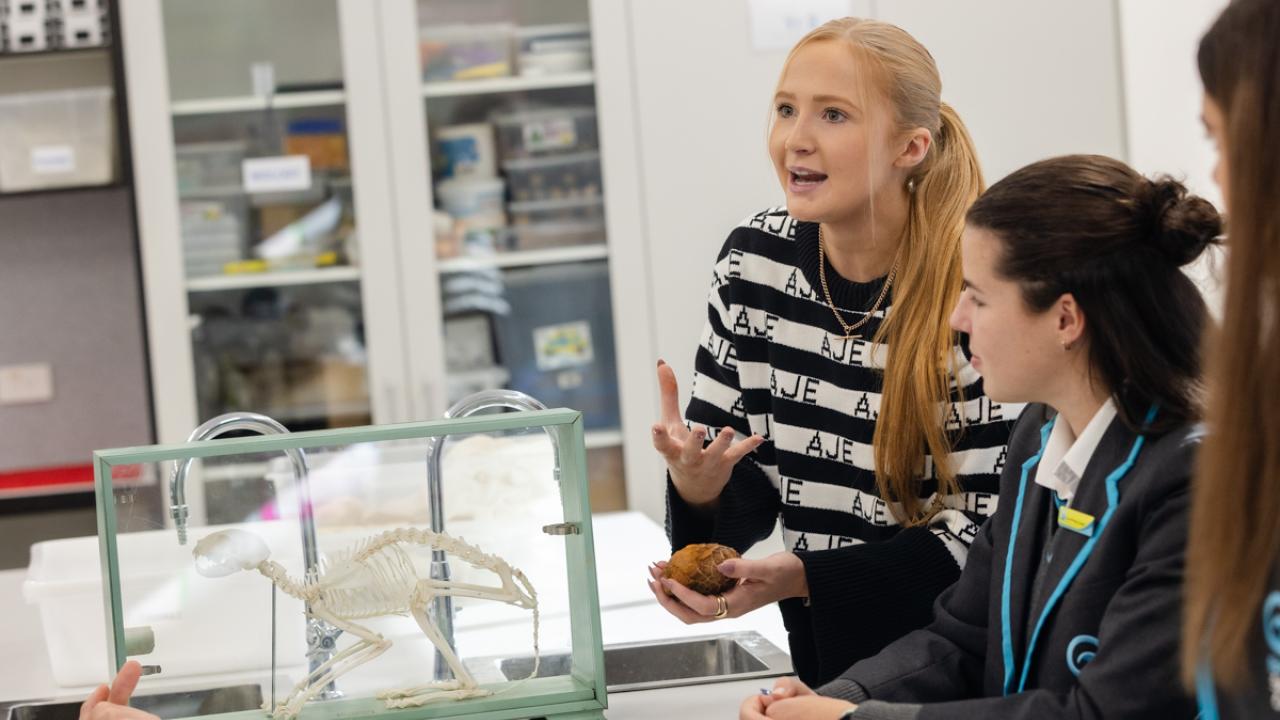
Innovation in schools is purposeful. It requires leaders who understand their context, identify opportunities for improvement, and bring people with them. It’s about using evidence, responding to complexity and creating the conditions where teachers and students can thrive.
Learnings from experienced leaders
Together, Bruce and Karen share lessons from decades of leading change, building capability and improving outcomes for students.
You'll learn:
- Why innovation is really about purposeful school improvement
- How effective leaders respond to complexity and uncertainty
- Ways to build leadership capability at every level of a school
- Strategies for engaging staff, students and communities in change
- Reflection questions you can use in your own leadership practice

Bruce Armstrong
Former school leader and education executiveBruce Armstrong has dedicated his career to improving education through school leadership, innovation, policy development and system reform. He has advised and supported schools across Victoria, including through improvement initiatives involving more than 1,500 government schools.

Karen Money
Regional Director, North Eastern Victoria RegionKaren Money is Regional Director North Eastern Victoria Region, supporting schools across a diverse area spanning metropolitan Melbourne, the Yarra Valley and regional communities including Corryong and Yarrawonga.
Drawing on decades of collective experience, Bruce and Karen share a common view: sustainable improvement is driven by leaders who understand their context, build the capability of others and remain focused on improving outcomes for students.
Key insights
- Innovation is responding to your school's unique context, not pursuing change for its own sake.
- Improvement starts by listening to students, staff and community.
- Adaptive leadership helps schools navigate uncertainty and complexity.
- Middle leaders are critical for turning strategy into action.
- Sustainable improvement depends on building capability across the whole school.
- Teaching, learning and student wellbeing must remain at the centre of every improvement effort.
Innovation: a driver of school improvement
With the advent of generative AI, rapidly evolving technologies and increasingly complex demands on schools, innovation might seem an obvious part of the education conversation. Yet Bruce says the term itself is not always part of the language schools use to describe improvement:
“Innovation isn’t in the vocabulary”
However, while the term itself may not always be used, Bruce believes innovation is intrinsically linked to improving learning and wellbeing outcomes for young people. For him, innovation is the ability to adapt and respond to the unique needs of a school, its students and its community.
“Innovation, depending on how you frame it, is an important component of leadership because you have to innovate in your context. You have to learn how to do new things and create new things.”
Bruce encourages school leaders to draw on evidence-informed research, considering how ideas can be understood and embedded within a school while remaining curious about the wider environment and what students need.
Meaningful innovation
Karen Money shares a similar perspective. She believes meaningful innovation begins with leaders who think entrepreneurially, connect intelligently with their communities and recognise that “learning doesn’t stop at the school gates”.
For both leaders, innovation is not about adopting new ideas simply because they are new. It is about analysing what students need and responding in ways that create meaningful impact.
Karen says that “innovation isn't just highfalutin ideas that are great to talk about but don't go anywhere. It's got to be rooted in analysis, landscape, and followed through with practical actions that are likely to succeed in order to set kids up for the future.”
Karen points to schools such as Bright P–12 College and Greater Shepparton Secondary College, where learning is deliberately connected to local industries and community opportunities.
In Bright, students are engaged in areas including tourism, viticulture, farming and environmental sciences. In Shepparton, students can develop practical agricultural skills, including rearing sheep and participating in wool judging competitions.
In both examples, innovation is shaped by the local context and the opportunities, with students learning about the challenges and thinking about solutions.
Ultimately, whether leaders describe it as innovation or improvement, Bruce and Karen agree the purpose remains the same: improving outcomes for every student.
Bruce adds, “the heartbeat of a school is the student's experience with a teacher and being able to assure the quality of every classroom for every child is the unrelenting ethical, moral imperative of leadership.”
Improvement starts with understanding your school
Achieving meaningful improvement is rarely straightforward.
Bruce says teaching and helping children to learn is inherently complex.
He explains that progress is rarely linear. It is shaped by a range of factors, including school culture, cultural, linguistic and socioeconomic contexts, staff capability and the increasingly complex needs of students.
“Young people don’t always progress at their ages and stages of learning, and children are presenting with more issues at school every day now because of the complexity and the rapid nature of change. They provide feedback verbally, behaviourally and emotionally in a range of ways.”
For Bruce, responding effectively begins with deeply understanding the environment in which a school operates.
Karen Money agrees that listening is the foundation for understanding what matters most.
She believes meaningful engagement with students, staff and communities helps leaders to identify priorities and avoid making assumptions about what schools need.
“I can’t speak highly enough of being able to listen – and not only to the people who agree with you. It’s really important to have the pushback, to have people that play devil’s advocate.”
Karen says effective leaders recognise they do not have all the answers and need to draw on the perspectives of those around them.
“Community stakeholders have to be part of that story, because no one knows it all on their own. Leadership and innovation are such a team sport.”
Student voice
With her mantra of keeping “kids at the centre”, Karen is also a strong advocate for giving students a genuine voice in shaping their learning and school experience.
“Go to the students ——otherwise you’re guessing.”
She says leaders can unintentionally view challenges through an adult lens, rather than understanding how students experience their school. By creating opportunities for students to contribute, leaders build trust, strengthen confidence and support young people to become active participants in their learning.
Adaptive leadership: respond to complexity and sustain momentum
If complexity is an unavoidable part of school improvement, the question becomes how leaders respond.
Bruce and Karen agree that navigating uncertainty requires adaptive leadership.
For Bruce, complexity is not a reason to give up. Rather, it requires perseverance, thoughtful diagnosis and the ability to bring people with you.
“Complexity isn’t about throwing in the towel.”
Bruce describes perseverance as a leadership disposition. He believes effective leaders begin by understanding the root causes of challenges before identifying solutions and mobilising staff through shared and distributed leadership.
People leadership
He says adaptive leadership requires leaders to balance systems and processes with effective people leadership. While strong structures, policies and programs provide important foundations, sustainable change depends on how leaders engage, support and influence the people around them.
“People who persevere are working with people. They’re setting clear expectations about norms for professional conduct and as leaders they’re modelling leading through change, empathy and demonstrating their values.”
For Karen, sustaining momentum requires courage, influence and a willingness to continue through the difficult stages of change.
“Nothing’s ever going to be smooth if it’s worth doing, and I think what separates the leaders that are successful is the courage to keep going.”
Shared commitment to change
She says successful leaders create commitment by connecting people to a shared purpose and identifying those who are ready to help drive change.
Karen reflects on her own experience leading significant curriculum reform, where she led the transition to a more student-centred model. Before implementing change and “ripping the band-aid off everything”, she listened to staff and students, conducted interviews and analysed data to understand the school’s needs.
“I listened for a good 6 months, interviewed everyone individually, and did the analysis of the data, but then made a case to the staff about this is what we’re going to do.”
Recognising there would be both supporters and challengers, Karen focused on building momentum with those willing to embrace the new direction while remaining committed to the long-term vision.
For Karen, adaptive leadership also means being comfortable with uncertainty. School improvement is rarely a linear process, and leaders must be willing to work through ambiguity while maintaining clarity of purpose.
“A lot of people aren’t comfortable with messiness and not quite knowing where they’re going to land. They want a clear pathway. You’ve got to be able to sit with that messiness to be a good leader and persist, even in the dip.”
Build capability through leadership at every level
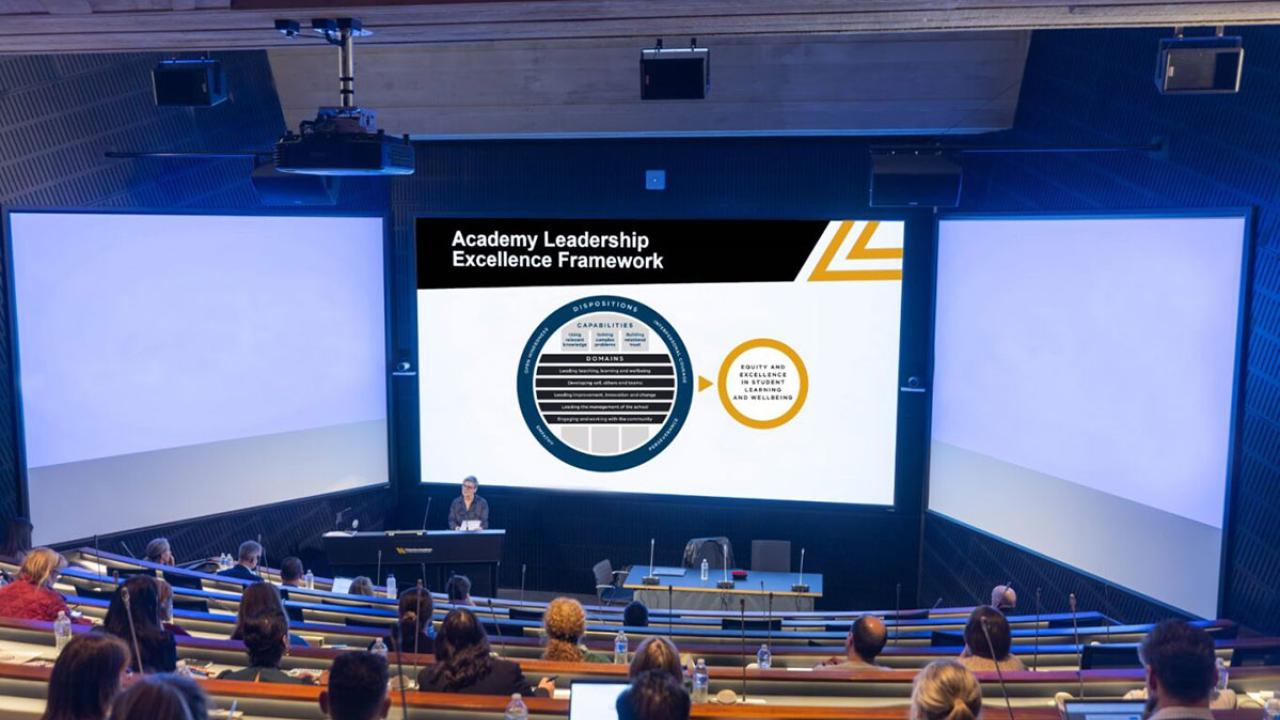
Adaptive leadership cannot rest with one person. For Bruce Armstrong, sustainable improvement depends on building leadership capability throughout the school and creating shared responsibility for improvement.
Bruce acknowledges that principalship can be a challenging and, at times, lonely role. This reinforces why strong leadership teams and investment in middle leaders is so important.
“Being a united leadership team and investing in your middle leaders is so important to respond to student learning needs.”
As leaders move further from the classroom, the nature of their influence changes. Rather than directly shaping student learning, they create the conditions that enable others to have an impact.
Turn improvement priorities into action with professional learning tailored to your school's context.
Professional learning culture
For Bruce, this is why developing middle leaders, strengthening teacher capability and fostering a strong professional learning culture are central to sustained improvement. A leader’s impact is ultimately measured not only by what they achieve personally, but by the collective capability they build across the school.
Karen Money reinforces the critical role middle leaders play in turning strategy into action.
“The middle leaders are your engine room of strategy translation and are often your best innovators because they’re talking to the people they lead and they’re advising up to the leadership team. They’re the translators of all the different approaches.”
Karen says middle leaders also play a critical role in strengthening and protecting school culture.
However, Bruce acknowledges that building capability takes time. It requires sustained investment and recognition that people need support as they take on new responsibilities.
“It’s an unrelenting program of building local capability in your school and sometimes leaders underestimate the amount of new knowledge that people need to do new work well.”
For this reason, Bruce highlights the importance of school-embedded professional learning, where staff learn together and develop the confidence and capability needed to respond to new challenges.
When staff work collaboratively, they build trust and confidence by seeing what they are capable of achieving together.
Alongside developing capability, Bruce says leaders must also be equipped to have the challenging conversations that are essential to improvement.
Quality conversations
“Having quality conversations is at the heart of leadership work and it's the one that many leaders feel under-skilled in.”
He says these conversations are often delayed or avoided because leaders are concerned about conflict. However, challenge and disagreement are a natural part of improving practice.
Karen agrees that effective leaders approach these conversations with preparation, clarity and care.
“To plan a critical, complex conversation with someone is gold. Don’t go in cold, make sure you know what you want the outcome to be, which is helping them to get better without burning the relationship bridge.”
For Karen, the ability to develop others while maintaining strong relationships is a defining characteristic of leaders who sustain improvement.
Keep focus on teaching and learning
Across every conversation, Bruce and Karen return to one consistent message: despite the competing demands of leadership, teaching and learning must remain the central focus.
For Bruce, the key is remaining anchored in what matters most — the learning taking place in classrooms.
“What’s happening in the classrooms that you don’t teach should be the compelling driver of principal leadership.”
Bruce says school improvement must ultimately be defined through its impact on teaching and learning.
“If you define school improvement as improving the quality of teaching so that students can learn more and do more, then the role of the school leader is to lead the focus in an unrelenting way, term on term, semester by semester, year on year.”
Karen also emphasises a strong focus on wellbeing, recognising that learning and wellbeing are interconnected.
“They are equally important and wrapped around each other if you’re trying to improve kids’ learning.”
Whether adopting an innovative approach, setting priorities, building capability or leading through complexity, sustainable improvement begins with understanding what students need and creating the conditions that enable every student to thrive.
Leadership self-reflection tool
Use the following focus area questions to reflect on your leadership practice and consider how the ideas explored in this article apply in your own school context.
Choose a current improvement priority or challenge in your school and keep it in mind as you work through each question.
Understand your context
- What are you hearing from students, staff and your school community?
- Where might you need to listen more closely or challenge your own assumptions before deciding what comes next?
Lead through complexity
- Where are you navigating uncertainty or competing priorities?
- What needs to remain clear and consistent, even when the pathway forward is not?
Build capability in others
- Where could you create greater ownership of improvement across your school?
- Who could you support or empower to take a stronger leadership role?
Have the conversations that matter
- Is there an important conversation that you have been delaying?
- What would a productive outcome look like and how could you approach the conversation with both clarity and care?
Keep students at the centre
What difference should the improvement you are working towards ultimately make to teaching learning and the experience of students?
From reflection to action
- Choose one focus area that deserves more of your attention.
- What is one action you could take in the coming weeks to strengthen your leadership practice and move improvement forward?