
08 Dec 2025
Little Maths Moments, Big Impact: Support your child with maths at home
Critical role of parents in children's mathematics education
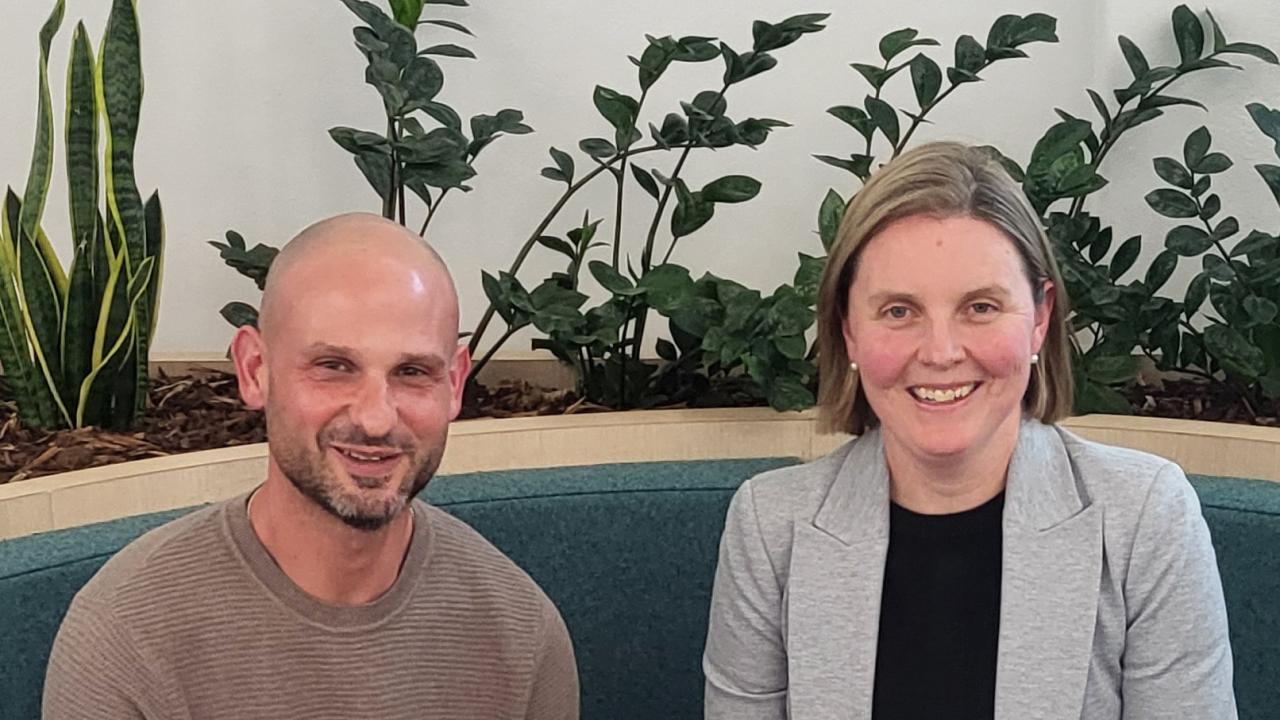
Dr Ange Rogers, numeracy leader, coach, and consultant, joins Academy Principal in Residence, Phillip Coloca, to discuss the important role parents can play in their children’s mathematics education.
With parents and carers in mind, this episode explores:
- how mathematics education has changed over time
- what mathematics looks like in the classroom today
- how young people learn best
- techniques and strategies that can support and encourage mathematics engagement and education.
Dr Ange Rogers
Dr Ange Rogers is a leading advocate and expert in mathematics education. As a classroom teacher, numeracy leader, coach, and consultant, Dr Rogers has worked with thousands of teachers, providing support, mentorship and guidance that has tangibly improved teacher confidence and capacity in numeracy and mathematics teaching.
Phillip Coloca
Phillip is an educational leader with experience across primary and secondary sectors. Prior to joining the Academy, Phillip founded and led Eynesbury Primary School and has held other leadership positions at Copperfield College and the Department of Education. Passionate about high-quality, evidence-informed teaching and learning, Phillip is a firm believer in the power of instructional leadership to positively impact young people.
Length: 45:28
Transcript

Download

Introduction to topic and speakers
PHIL COLOCA (00:01):
You are listening to the Victorian Academy of Teaching and Leadership podcast series where we showcase conversations with some of the world's biggest thought leaders in education. We also bring you the thoughts and reflections of teachers and school leaders from across Victoria. Hi everyone. My name is Phil Coloca and I'm a principal in residence within the Teaching Excellence Division here at the academy. Today we're joined by Dr. Ange Rogers, an expert in the teaching of numeracy and mathematics, who over the past 20 years has worked as a classroom teacher, numeracy leader and coach. Presently, Dr. Ange develops and delivers professional learning in addition to providing support, mentorship and guidance for classroom teachers as a consultant work that has tangibly improved teacher confidence and capacity in numeracy and mathematics teaching. Furthermore, Ange's researched and written extensively in this field, including her PhD entitled Investigating Whole Number Place Value Assessment in Years three to six, creating an evidence-based developmental progression.
(00:56):
Perhaps most importantly in the context of this conversation, however, Ange's also a parent to four children providing unique insight into the challenges faced by both educators and parents of primary age children. Today we'll explore how maths and numeracy are conventionally taught across Australian and Victorian schools, how this differs from our own time as students and how parents might effectively support their children's learning through this process. A particularly important aim of this podcast episode is to equip parents with practical and actionable strategies that can be implemented easily and in very little time. Thank you for joining us today, Ange. It's an absolute pleasure to have you here to discuss a topic that I know many parents are keen to know more about.
ANGE ROGERS (01:35):
Thanks, Phil. I'm excited to be here.
PHIL COLOCA (01:37):
We're excited to have you. We'll jump straight in, but before we do, could you tell us a little bit about your professional journey as well as how you arrived at both your research and the important work that you do with both teachers and schools?
ANGE ROGERS (01:48):
Yeah, so I started teaching probably about 20 years ago. I was fresh out of uni, didn't have any kids at that point, and I love teaching. I love maths teaching. I really enjoyed working with younger children, but I also worked with the older children as well in my role as a numeracy leader. I think that what came about through that work was a real understanding of the connection between home and school in mathematics. And I think I lacked a little perspective at that point because I would always think when a child came in and then they hadn't done their reader, I would always think, oh, why can't you just fit in the reader? How hard is that to do? And now being a parent or for children, I can see very much how difficult it is to fit those little things in at home. So I guess one of the things I remember saying to a parent as I was going on maternity leave with my first daughter was, oh, how hard can it be?
(02:49):
I work with 28 children every day. How hard can one child be? And just, I worked out very quickly that it's very difficult having a child is such a different relationship and a connection compared to being a teacher. And so I think that from the start, I really tuned into that role that schools play in connecting home and school. And as my children got older, I wanted to really help teachers see how hard it is for parents. And I wanted parents to be able to help their children at home in a way that was going to really connect school and what is happening at home. So yeah, I became quite passionate about those connections. And that sort of a side note, because obviously my work is more with schools, more with teachers around helping them to understand how to teach mathematics in a really effective manner, but I'm very passionate about the home and school links
PHIL COLOCA (03:48):
And I think you bring some real insight just having that experience. And I know just listening to you and just having a similar career progression 20 years in teaching, but I only have two kids and I'm absolutely in awe of the fact that firstly, you have four, but also you found time to get yourself a PhD and do those kinds of things when I barely have the energy to put dinner on in the evening. So absolutely incredible. And I think that perspective that you actually bring to the conversation, having both lenses is just so important. And if I can get you to just put yourself in that position of the parent for a second, a refrain that we often hear from parents is that maths and numeracy are not taught today in a way that actually matches their own schooling. So they actually in some respects kind of fail to recognize that if they're a lay person, if they don't have a school background themselves. Your extensive experience working in and alongside schools kind of uniquely positions you to relate to and clarify how and to what extent there's actually been a shift, and I wonder if you can actually speak to that. So what might parents recognize and what might they not in today's educational landscape?
Mathematics education changes over time
ANGE ROGERS (04:49):
Yeah, a lot has changed in education since we went to school. I was a child of the eighties, so that's when I was in primary school. And I think that it's difficult for parents to remember what they actually did in primary school and particularly in mathematics because I think the things that stand out to parents are times tables and fractions. So when I do parent nights at schools, I often do a survey and I ask parents, what do you remember from primary school? And they're the two biggest things, times tables and fractions. And while we still teach times tables, we often call them multiplication facts now, and we also still teach fractions obviously, but there is just so much more to the maths curriculum. So for parents, just to be remembering those things means that there's a lot more to it that we need to help them understand and build those foundations so that when they do get to the times tables, parents can then help with the fluency around that.
(05:48):
So there's just a lot of language I think that's changed and it continues to change even for teachers. Every time there's a new curriculum that comes out, we have to unpack what the language is in that curriculum, and that is something that parents aren't really with either. So it's communicating from school to home about what those words mean. So for example, I remember a friend writing to me one night saying, my daughter is talking about bridging and she has to do bridging for homework in maths. Can you explain what on earth that is? And I know exactly what it is because I talk about it all the time. And in schools, teachers know what bridging is. And I think that there's just often that disconnect where schools use this language and they forget that parents don't know what these words mean. So bridging just for those listening is like when we bridge over a place value part.
(06:42):
So we might go from 99 to a hundred, or we might go from 999 to a thousand forwards or backwards, and that's always a very difficult point for students to move forwards and backwards over those place value parts. But yeah, there's a lot of words and language that parents won't be familiar with. Things like part whole and subitizing. Two big things that happened very early in our curriculum and those just weren't even around when we went to school just to explain subitizing, is when you look at a dice and you see the pattern, we don't actually count how many pips there are. We actually just recognize that immediately. So that's what subitizing is. Looking at a collection and then recognizing how many, the numerosity of it, how many are in that collection. And part whole is another important piece in early mathematics in number. And that's basically understanding all of the numbers up to 10 and knowing that, for example, nine is made up of five and four, it's made up of six and three, it's made up of seven and two, and that nine is before 10 and then nine is after eight. And so there's a lot of knowledge that our foundation and year one and year two teachers would love our children to be really fluent with. But I think that's not being communicated to parents sometimes. And so parents just revert back to what they remember from when they're at school and they don't know about these things. I think it's making those connections clear so that parents do know what's happening and what the language being used at school is, and then we can all work together in partnership.
PHIL COLOCA (08:23):
Yeah, absolutely. And just like you mentioned, when the curriculum, when we start to unpack the curriculum, we do have to unpack the language. We have to really break that down from the perspective from a professional perspective so that it can be then implemented in the classroom. And we maybe take for granted that we are speaking to lay people in a different field, and if we were speaking to engineers for example, we would absolutely want them to use language that would be a lot more suitable for our context to really bridge that gap in knowledge there as well. So that's definitely one of the challenges that really comes into play between that kind of home and school relationship. And I wonder, you touched on the idea of the kind of evolving research landscape and that we've moved quite considerably. I know that as a kid many decades ago, I'm not going to go into detail about how long ago, but subitizing a concept that we were necessarily taught. Something that you touched on in terms of the kind of broader framework for how students learn. What do you think is important for parents to be aware of in terms of their child's progression, how they pick up concepts, how they kind of develop that and how they build on that knowledge?
Explicit instruction for acquisition
ANGE ROGERS (09:31):
Yeah, I think one of the most important pieces of research that I've worked with is the instructional hierarchy. So this was research that was done in 1978, so a long time ago, but it just really helps put into perspective the process for learning that children, not just children that anyone goes through. So the instructional hierarchy talks about if you are learning a skill, it could be riding a bike or it could be doubling numbers in mathematics or tying your shoelace. What happens is we go through four phases in that learning. So the first phase when we're just very fresh to this new skill, it's called acquisition. So this is where children or anyone really is just trying to get their head around how do I actually do this? How do I accurately answer this or perform this skill? So at that point, a lot of explicit instruction is really important around telling them exactly what to do, modeling it for them, explaining what the words mean and showing them how to do these skills.
(10:35):
Practice for fluency (key area for parents to help)
And then once they understand what the skill is, they're accurate with it. The next phase is working on fluency. So this is where I think parents can really help because I encourage parents to leave the teaching of skills to the school in mathematics, and then what parents can do is work on this fluency piece. So the fluency phase is that the children or the person is accurate with the skill, but they just need extra practice because we all know that to become better at something, we just need lots of repetitions. Our brain needs to experience that over and over again. And so for me, that's what parents can help with. They can give lots of opportunities for practice of particular skills that are important at school in maths, and they can do that at home. And then you've got generalization and adaptation. So those phases, taking that knowledge and then applying it in new context. So problem solving, and again, that's something that can be done at school and left so that they have that fluency and they can work on those more complex situations at school. But yeah, I think that is understanding the instructional hierarchy is important for parents because they can then see which phase they can actually help and support with really well.
PHIL COLOCA (11:52):
I'd love to take that further if we could and just kind of explore that concept of fluency in a bit more detail because you have really written extensively on why fluency is an area of real leverage for parents, and you've presented on that as well and been really engaged with some of the work that you've done around that space. Would you mind just elaborating a little bit more about what fluency is and why? I mean you made that connection to problem solving, but if you could kind of detail for parents, why is it important for students to have the students to have that fluency and how does that actually support them to generalize into problem solving?
ANGE ROGERS (12:24):
Yeah, so fluency, the definition of it, it's a little bit of a contentious issue in education, how to exactly define it. So we won't go into that in too much detail, but for the parent audience, basically it's answering with ease and speed. So if you think about fluency, and if we think about it when you talk about a fluent reader or someone's fluent in French or you watch football and you can see that a player is really fluent in the way they play the game, it looks easy. It looks like they are doing it without thought, it's automatic, they're very confident, it's effortless. So we know what fluency looks like and that's what we're aiming for in mathematics as well with these core skills so that if they are fluent with them, then when we get to more complex problem solving, they're not having to take up all of that working memory and their brain space basically by trying to think, oh, what's double seven? And so they're just taking up too much time and space when they should be using all of that energy, or it'd be much better if they were using it on actually solving the problem. And problems are so complex that we don't want to be wasting any energy on something that we could have made fluent earlier.
PHIL COLOCA (13:41):
So it's almost that ability to recall something without really even recognizing that you're kind of doing that in the process, that very speedy kind of process. And you talked about that idea of confidence, that's such an important aspect and something that we really want to instill in all students. And I think that's a really lovely kind of concept to explore there. When we are talking about fluency, and I'm sure a number of parents are working with their kids at home and they're listening to them and they're probably kind of sensing where they do feel confident or not so confident and so on and so forth, but they're probably not feeling overly confident themselves in diagnosing where there might be an issue. Which aside from having a vague idea, what kind of things should they be looking for in terms of what are the things that they would need that they would really try to encourage or support their children to actually be fluent in?
Fluency and accuracy
ANGE ROGERS (14:32):
Yeah, so when we think about, I think it's important to think about the difference between accuracy and fluency. So accuracy is answering something correctly. So if I say to you, what's double seven? You could say 14 and you could say it within one second or you could take a whole minute and still come up with the answer. And so both of those children are correct in their response, they're both accurate, which is great. They need to be accurate. But what we also need is that next piece of fluency because we don't want 'em to be taking a minute to solve a simple equation like that. So what we need to do is if we as parents can recognize that, okay, great, they're getting these things correct, but they're taking just a little bit too long, and when I talk about it too long, generally it's accepted that about three seconds, if they can answer within three seconds, then they're considered fluent.
(15:27):
So even less is better. But what you might be noticing when you ask a question, if you ask your child what's two multiplied by seven, they might be going and so they're just sort of delaying and then, or they might look up at the sky and look around and just be distracted. And often we don't notice that because we might not be looking out for that. But once you start tuning into those things, that gives you an indication that they're actually not fluent, it should come out pretty smoothly if they are fluent. So we want to look for those cues and then we can help them by working on just more repetition of that particular skill. And so that's what that indicates, that they're accurate, but they're slow. So that points to the fact that we just need to give them more opportunities to practice that particular skill or fact.
Support at home
PHIL COLOCA (16:27):
Angela, that's really fascinating and I think from my perspective, what we're talking about is really parents working with their children at home. Obviously they're not in the classroom, they're not able to actually influence what's taking place there. And when we talk about working with their child at home, we're often talking about homework and we kind of know that there are very varying different and differing approaches to homework both in the educational landscape and they sit on a scale from minimal to high expectations, and they're generally based in some form of belief or evidence-based that's out there that can be drawn from. And we also know that a number of schools actually do choose to emphasize fluency practice as a core component of the homework expectations for students. So I think that's really critical that we call that out for parents at this particular point in time.
(17:13):
But on the flip side, parent beliefs around homework as well can differ significantly. So for some they have an expectation that it should be minimal or it should be quite complex, and that really does follow a spectrum very similarly. That's kind of what we see in the school landscape as well. If we consider the journey from foundation to year six and we really kind of focus parent attention on that, work on fluency and maintaining fluency over the course of a child's academic career, how might we frame what homework can and should look like and how parents might support their children in that process?
Homework: short, easy, enjoyable and focused on fluency
ANGE ROGERS (17:46):
Yeah, homework's really contentious. There's mixed feelings as you touched on. And even in the research it's a little bit, there's sort of differing points of view, but to me it depends on the purpose. And I see the purpose of homework as being short, sharp and focused on fluency. So in literacy, we send home the reader so that children can work on their reading fluency. And none of us seem to have a problem with that. That's just accepted. And we are very keen to do that with our students and our children at home. And as teachers, we see how important that is. You really notice those children who are reading at home every night, it really does help them. And so I think there's just a gap in maths at the moment around fluency practice and that connection with what's happening in the classroom. So the same is required in mathematics. We need them also to be practicing things at home, but often parents don't know what to do. So I think that math's homework should be about fluency, it should be fun, it should be easy, it should be enjoyable. And I, I'm happy to share some examples of things
PHIL COLOCA (18:59):
That would be great if you could kind of go through and what that might look like at different levels and areas.
Fluency practice examples for different year levels
ANGE ROGERS (19:04):
So I've done homework for many years with my children just as fluency practice. So my children are 16 now. I can't even remember how old they're, they change every year, but 16, 14, 9 and six. So there's two that have been through primary school. So I've always kept that fluency practice up with them. And I've got two in primary school at the moment and we do the same. We still do fluency practice every day on mathematics and obviously reading as well. But in foundation, and my son's in foundation this year at the moment I have focused on one more and one less. So looking at the numbers one to 10 and I just say to him, what's one more than three? What's one less than seven? What's one more than four? And just getting that quick response and it's meant to be easy for them. That's really important about fluency homework is that they shouldn't be worried, they shouldn't be stressed.
(20:05):
You shouldn't be stressed. It should be a fun thing that happens really quickly and it's over and done with. And it happens for me when we drive to school, we do it. So we sit in the car where I'm either driving or we get to school a little bit earlier and then I have the children in the car and I just fire questions at them. And they're fluency questions where they just have to answer it quickly and they feel good about themselves. They walk into school going, I've just got five questions correct, and I've answered them really quickly. And so it's a boost for them. But I feel good about myself as well because I feel like I've helped my child and set them up for success. So I think that it doesn't have to be complicated, it just has to be short, sharp, focused and looking at areas that will really help them.
(20:56):
So for example, in year one, I would focus on something like doubles. So getting children, if you just ask them what's double five? And they have to say that it's 10, so up to 10, so saying what double 10 is and then them saying 20. So they obviously have to work on, and I'm sure teachers will have worked on this at school with the students, but the conceptual understanding of where doubles come from is really important before, and that's where we were talking about the acquisition phase of the instructional hierarchy. So that's the teaching that the teachers are doing, teaching them what doubles is so that then we can just work on that fluency at home.
(21:39):
And actually the doubles layer really important foundation for multiplication. So later on when we get to grade two and three and four, we're looking at multiplication facts, which we used to call the timestables. And so doubles are really important in the strategies that we teach them. So when you look at twos that is just double two times seven is just double seven. When we look at the threes we teach it's double and one more group. So if it's three times seven, it's double seven, which is 14, and then one more group of seven, which is 21. So doubles form a really important foundation for the multiplication facts. So often parents want to jump straight into the multiplication facts because that's what they remember. And I remember when I taught grade one, two parents would often come to parent teacher interviews and say, oh, I've put the poster on the back of the toilet door and they're learning their multiplication facts.
(22:32):
And from my perspective I was like, don't worry about that yet. They actually just need to know their doubles. If you could work on their doubles, that would be great. So again, parents are happy to work on things, but often we don't tell them what they need to work on. Year two, I then work on things like double double. So with the numbers one to 10, so asking them what's double double four, so that means they have to double four, which is eight, and then they have to double eight, which is 16. And so that's just building on that double work. And that then helps 'em with the fours multiplication facts for the fours because that's what we do when we do four times eight, we double eight, which is 16, and we double 16, which is 32 in year three. Something that you can work on is halving, so halving numbers to a hundred.
(23:22):
So for example, what's half of eight, what's half of 60? And again, if you ask these of your child and they're answering them incorrectly, that tells you that they need some help with actually the teaching of that. So that's not something that parents so much need to worry about. It's more that you need to focus on the fluency. So that tells you that they're not quite ready for that fluency practice yet and they need more of that teaching around what that means. And then year fours, I work on their multiplication facts. So the times tables by the end of year four in our curriculum, the Victorian curriculum, the Australian curriculum, we need to be fluent with the multiplication facts up to 10 by 10. This is always an interesting point because when we went to school, we learnt the elevens and twelves. Yeah. And so that's actually sort of leftover from the imperial system back in the day when they had pounds and feet and all of those different things that we don't have now.
(24:24):
And I don't even know how those systems work because I've been in the decimal system. But the 12 was important then in those systems. So they had children learn up to the 12 times 12, but now in our curriculum they've realized that we actually don't need to know those. We can work out other strategies if we're working out 12 times seven, we could work out 10 times seven and then add two times seven to it. So we teach those strategies at school, but the actual fluency or the recall of multiplication facts is just up to 10 by 10. So that's what I work on in year four fluency around that, just asking them what are three fours? And so that means what's three rows of four or what's three times four? So all of that language is fine to use, and in year five I get them to work on factors.
(25:15):
So what are the factors of 12? So that means what are the numbers that multiply together to make 12? So obviously one and 12 and three and four and six and two are the factors of 12. So it's getting them to recall and links back to the work they did in grade four with their multiplication facts, so getting 'em to work on factors. And then in year six, just something like simple percentage discounts. So what would 10% of a $50 basketball be or getting them to work out simple percentages is something that would really help your grade six students. So hopefully that just, and obviously they're, and there's just a few examples, one per year level, but hopefully it just gives parents something that they might think about and work on with their child.
PHIL COLOCA (26:03):
Just listening to you kind of break that down and how you've thought about it sequentially from year to year in terms of you've really provided us with some concrete examples and obviously there's so much more that you can kind of be doing, but this is a podcast and we won't be able to break that down. But in terms of that element, parents are supporting their children, they're working on fluency activities exactly as you've described. And you've also kind of cautioned against that idea that there might be a reteaching issue that what it actually might demonstrate is they're not ready for fluency practice still at the acquisition phase. Is there anything you would caution parents from in terms of that support at home? What is it they should be thinking about in terms of where they step in, where they address a situation or where they would actually communicate with the teacher and seek additional support
Teachers focus on accuracy
ANGE ROGERS (26:53):
I think if they keep that in mind around accuracy, just using that as a bit of a measure to if I'm asking these questions and they're not accurate with them, then I'm going to leave that to the teacher to teach. So sometimes as parents, we want to jump in and try and teach things to our children. And while that's great and all the research shows that if parents are involved and interested in children's education, then that has great outcomes for the children. So we want parents to be involved in their children's education and be interested, but I would just say leave the teaching to the teachers because what happens is there's been so many changes over the years since we went to school in the methods, in the language, in the strategies, in the models, all of those things have changed. And so we don't want to confuse our child.
(27:47):
That's the last thing we want to do in mathematics is confuse them. So I would say just leave the teaching to the school and to the teachers and if you are noticing something that they're not accurate with something that perhaps you think maybe they should be communicating with the teacher about that and talking to them about it. But generally leaving the teaching up to the school because you don't want to, as I said, confuse your child. You don't want them going to school and saying to the teacher, no, that's not the way my parents taught me to do it. They told me to do it this other way. And often, I dunno if you've got into these arguments, but I have because I tend to sometimes, not often, but I will try and teach something because I think I have the knowledge to be able to teach a few things in maths.
(28:38):
And often my kids will say to me, oh, that's not how we were taught that at school sort of thing. It doesn't often happen because they go to a great school and very happy with the maths teaching there, but you can see that that causes friction because they are hearing this message at school and then you are trying to tell them something different and they don't know who to believe and their respect and their level of trust for the school is and that their teacher is way above what you as a parent could ever say. So they will believe a teacher over you any day, which is great because they respect and they trust
PHIL COLOCA (29:17):
As an educator, I love here,
ANGE ROGERS (29:18):
They love their teachers, which teachers are amazing. I think that shows how amazing they are that they will believe a teacher over their parent, but we don't want to get into that space where we're having arguments with our child about who is right here. So just leave that teaching to the teacher, work on the fluency at home. And I think that's the best way to avoid confusion and just support your child
PHIL COLOCA (29:46):
Because that confusion can really inhibit that development of fluency as well. Really when you give them another thing to consider, whose word am I going to go by here? Suddenly they're really kind of deviated from what is actually the task in front of them. That's a really excellent cautionary tale for parents to really take on board and understand in terms of what they can do or where they should focus at their attention. You've spoken about specific strategies, but more holistically when we're talking about mats and numeracy with first students or children and we're trying to give them that assistance, where should we really be driving our focus?
ANGE ROGERS (30:22):
I think it's really important that we're building a love of mathematics, a curiosity of mathematics at home. So really showing where maths happens often. And I often get parents to reflect on how they think about mathematics and where they see mathematics. And a lot of parents, when I ask them, they say, I see myself in my high school maths classroom when I think of maths. That's what I think of. And to me that's a little bit sad because that's probably not the most exciting time or the most exciting example of maths that happened in your high school classroom. There is maths that's happening every day in your life and every day in your work. And it is so much more interesting and beautiful and exciting than the stuff that's often happening in classrooms. So I think sharing that beauty and that curiosity with your child and that interest in mathematics and then they take on what you are interested in.
(31:23):
So obviously I'm very interested in maths and so I point out maths a lot and we talk about maths a lot. And so just by osmosis, my children have become interested in maths as well. They don't have a choice. No, I'm kidding. I do. But just because if for example, you are interested in football suddenly because you talk about football all the time or whatever it is, your children often become interested in that as well. So they're like little, they watch so much of what we do and they just take it in. So if we are interested in maths, then they will become interested in maths. So I think that's really important. I think playing games is really, really important. So we try and play a couple of games a week with our kids at home if we can one a day on the weekend and then maybe one during the week.
(32:14):
It doesn't have to be a long game, but card games, board games, I always talk about how in my spaghetti bolognese I put in carrot and zucchini and I grade it up so that they don't know that it's in there just so that they're getting these extra vegetables. And I feel like playing games with them is like that. It's extra maths, but they don't see it as maths. They don't see that they're doing the problem solving or the critical thinking or the number recognition or whatever it is, counting when rolling the dice. They don't see that as maths, but it actually is. So all of these experiences come together to strengthen their understanding and their perspective on where all these things fit together.
PHIL COLOCA (32:58):
I love that you kind of really, so far through our conversation today, you've really explored some very direct and focused areas. We want to work on your doubling for example and that kind of thing, but also then you're constantly on the lookout for these incidental opportunities where you might be able to draw attention to the maths or not necessarily draw attention to the maths within it, but that there's always a potential for a learning experience within that, even if they don't realize that they're actually involved in a learning extent, they don't know that they're eating their vegetables, so to speak. And similarly, I also create zucchini as well because that's a real battle in our household too in terms of that. I really want to explore that incidental as opposed to intentional approach for a moment. So how do you go about seeking out or capitalizing on those opportunities when they do arise, and then what does that actually look like for you? And when you are being intentional on the flip side of that, where do you find the time to be able to do that? Because I'm imagining a really busy and hectic lifestyle and many of our parents will relate to that. How do you actually find that time to really interweave and interject those opportunities for that fluency practice?
ANGE ROGERS (34:09):
Yeah, I think I'll probably start there because it is busy. Everyone's busy. We've got four different children going four different ways, and my husband and I are busy as well. So there's not much time. And as I talked about at the start, I used to think when I didn't have kids, how can you not find time to do a five minute reader? I can absolutely see how that happens because by the time you get them in from school and unpack lunches and try and cook dinner and then you've got some sporting activity or whatever it is, it's eight o'clock and bedtime before you've even thought about anything. So as I said, I like doing the fluency practice before school just because I find after school it's chaos. There is just so many different variables that can go wrong and to actually find the time to do it on a regular basis.
(35:07):
And that's what fluency practice is all about. It's about just having those very short sessions but daily. So it's better doing five minutes practice daily than it is doing half an hour once a week sort of thing. So really telling and sharing that with parents that it's not about just length of time, it's about frequency. So it doesn't have to be a long session, it just has to be often. And so as I said, I do it driving in the car because I find that's just downtime. They can't get out of the car. Well, they could but it would be very dangerous. But they're like a captive audience and they've really got nothing else to do in the car apart from fight with each other. And so I'm trying to avoid that as well. So for me, it's a perfect time to do that fluency practice in the morning when we're driving or when we arrive at school early.
(36:00):
But the thing I've learned about practice over the years reading a lot about practice and fluency is that you have to anchor it to something that happens every day. So if you anchor it to after you do your teeth, we're going to do the fluency practice having something that happens every day and then so that that's your flag to go, okay, we are now going to do our fluency practice. Because if you just leave it out in the ether to happen by chance, when you get a moment, that moment never happens. It everything gets in the way. So you've got to lock it in and then it becomes you are in a routine. They're in a routine and they know, so they will come to you if you forget and they'll say, oh, we are meant to do our fluency practice. They actually enjoy it because one, it builds their confidence.
(36:52):
It's making them feel good about themselves. The thing about fluency practice, they should be getting it correct because they're accurate, so they will be getting it correct and they'll be getting faster. They'll notice themselves improving. And so it's that dopamine hit for them. And so they will keep coming back for it. They'll be like, can we do our fluency practice today? And I know for my children it's uninterrupted time, one-on-one time, and when there's four of them, that doesn't happen very often. So even though it is maths time, I think they appreciate that for those five minutes it's just me and them doing something together. So yeah, I think that works really well for them and for us as a family as well, just having a set time that we do that fluency practice and it happens every day,
PHIL COLOCA (37:46):
Love that connection to routine. It's such a healthy way of looking at schooling, and Oslo really has the potential to have that transference to, I understand that at a particular time, I'm going to work on this. I've got that one-on-one time with mom. I can really appreciate that time. It'd be framing in so many different ways and really creating enthusiasm for the day ahead of school and really setting them up with confidence to attack that school day as well. I think that's fantastic. You talked about games earlier, types of games, so can you kind of elaborate on the types of things you might be doing there or other kind of incidental approaches to when you find other opportunities to support them with their numeracy or their maths facts?
ANGE ROGERS (38:26):
So we're a big game family usually for their birthday and for Christmas they'll get a book and they'll get a piece of clothing and they'll get a game. You can imagine four children. We've got a lot of games over the years. We've been through a lot of games. We are very, I think we have a good game radar about what games are good and not because we've played so many. And the ones that we love, UNO, I think we've played Uno 5,000 times and we're still not sick of it. And now we're at a point where all of us can play and we're all fluent in the game. So you go through, we've been through the phases with all four of them where they've had to learn the rules of Uno, and then when you're playing and then they're not fluent with the game. It's just a bit,
(39:18):
It's a battle. It's a battle, yeah, it's not really a fun game. It's not that it's not fun, but it's just a different feel. But once they are fluent with it, then the strategy comes into it and then there's competition and that banter really takes off because they can focus on that bigger picture. They're not just thinking about, oh, what does draw for mean? What? So we're at that point with Uno. Trouble is another one we love. My kids are in a trouble championship at the moment with each other. They're keeping track of who wins. And I've found them playing trouble by themselves because one of their brothers or sisters wouldn't play with them. So they're just lying in the lounge room, just playing it themselves. They just love it. They're really into it. And I think it helps that we are into it as well.
(40:07):
My husband will always play trouble with him if they ask him to play. And I don't love trouble. I find it. Well, I'm just not very good at it. And so that's a bit of, I probably should work on that. I probably need more practice in it, but just they love that it's dice and it's chance and it's counting and it's strategy, and it's all of those things that maths is other games, so they're all games from the one company. And if people haven't heard about them, they're brilliant builds is great for spatial visualization. But yeah, there's just so many great games out there and they're all got maths all the way through them. We talk maths when we watch deal or No-Till most nights. And they love just talking about, oh, should that person take the deal or not? And reading the numbers. And we often will watch it and we'll choose a case each, and we each have to choose a number and then we order who won that night.
(41:14):
So once they open up the case and you work out what's in the case, we work out who won in our family of Dylan. Just all of those things are fun, but it's maths. And same when we watch footy or cricket or sport, there's so much maths in sport. And so just saying, oh, how much is Collingwood winning by now? Or I wonder how long there is to go in the match and getting them all of those things. I really like that prompt. I wonder because it's very inclusive. It's just like, I wonder, I wonder what? And so that gets them thinking about maths. I think when you're asked those, it doesn't have to be maths, but I use it often with maths sort of questions.
PHIL COLOCA (41:56):
Absolutely. Yeah, definitely transferable, but very much appropriate to what you're kind of speaking to. That's absolutely fantastic. And I think you've touched on so much in terms of the work that you're doing with your own kids, but also that kind of potential that other people, if they implement some of this with their own kids, they'll build that level of confidence, that positivity towards mathematics and so on and so forth. Are there any other points that you just want to touch on in terms of all the reasons why parents should really try to focus on this if they can, and utilize what little amount of time they might have to make something like this work? What else is a convincing factor that might actually drive them towards that?
ANGE ROGERS (42:35):
Yeah, I think it's that the strengthening of the neural pathways in the brain. We know, for example, my daughter learns violin and I don't know how to teach violin, so I leave the teaching the acquisition of up to the violin teacher, but I can help her with that fluency practice and that's what her brain needs, her brain needs just to play those notes or whatever the scale, I dunno what it is, but she needs to just do it over and over again. And it's the same. My son loves football, and so I think it's actually passing on lifelong lessons to them by instilling the understanding that if you practice something, you will get better at it. So my son who's in prep, he says things to me like, oh, I'm not good at that yet, but if I practice, I'll get better at it, sort of thing. So for me, that's one of those moments where it's like, okay, I've done a good thing as a parent here because that will stay in his mind forever. And for everything that he feels like he's not good at yet, it's not that he'll drop his bundle, he'll just go, okay, no, I need to practice it more to be better at it.
PHIL COLOCA (43:40):
Absolutely. Listen, an we've kept you for a little while, but we really do appreciate the time that you've taken to spend with us today. And also just really share your knowledge and your wisdom around this type of practice and how parents can really support their kids. If there was just one thing that you kind of wanted to leave parents with, what is that one thing that you'd like to emphasize?
ANGE ROGERS (44:00):
I think it's just leave the teaching to the teachers, work on fluency at home with them and really embed and work on that curiosity and that playfulness around mathematics. Because if you can pass on that to them, then they will approach maths classes with a very different attitude and they'll engage more in class and they'll be interested, they'll be able to make connections and that is going to be a real benefit to them in class.
PHIL COLOCA (44:32):
That's something we all want for our kids, I think. Thank you so much, Ange. It's been an absolute pleasure to have this conversation with you today. I know our parents will be really, and really unpacking what you've said today, and I think super keen to actually get into it as well. And it's just a little bit of direction. Let's hopefully what we've given you today is just less of a feeling of helplessness and a real place to begin and to really kind of focus your attention to start supporting your child and even connect to the work that actually is being sent home as well and understand where the connection to fluency might be. So Dr. Rogers, thank you so much for your time today for your incredible insights. It's such a timely and important topic and we really believe that people will get a lot out of it. So thank you for joining us.
ANGE ROGERS (45:15):
Thanks Phil. Hopefully everyone will be doing some maths fluency in the car from now on.
PHIL COLOCA (45:20):
They're listening to this in the car right now. That's their job for the next 10 minutes or so. Good, thanks.
ANGE ROGERS (45:25):
Thanks.
PHIL COLOCA (45:26):
Bye.
Discover more resources
Valuing maths positively impacts student learning outcomes and determines whether a student will continue to engage with maths at school and beyond. This episode discusses a particular type of maths – utility value – and the research backed way to improve it. Hosted by Teaching Excellence Program Master Teacher Ben Allen with guest Dr Sarah Buckley.
Learn more

Get practical strategies for addressing maths anxiety in Australian classrooms. Featuring Dr. Sarah Buckley (ACER) and Rachael Gore (TEP Alumni).
Learn more
Learn how valuing maths can boost student outcomes and engagement. Features Emma Moore and Dr. Sarah Buckley from ACER.
